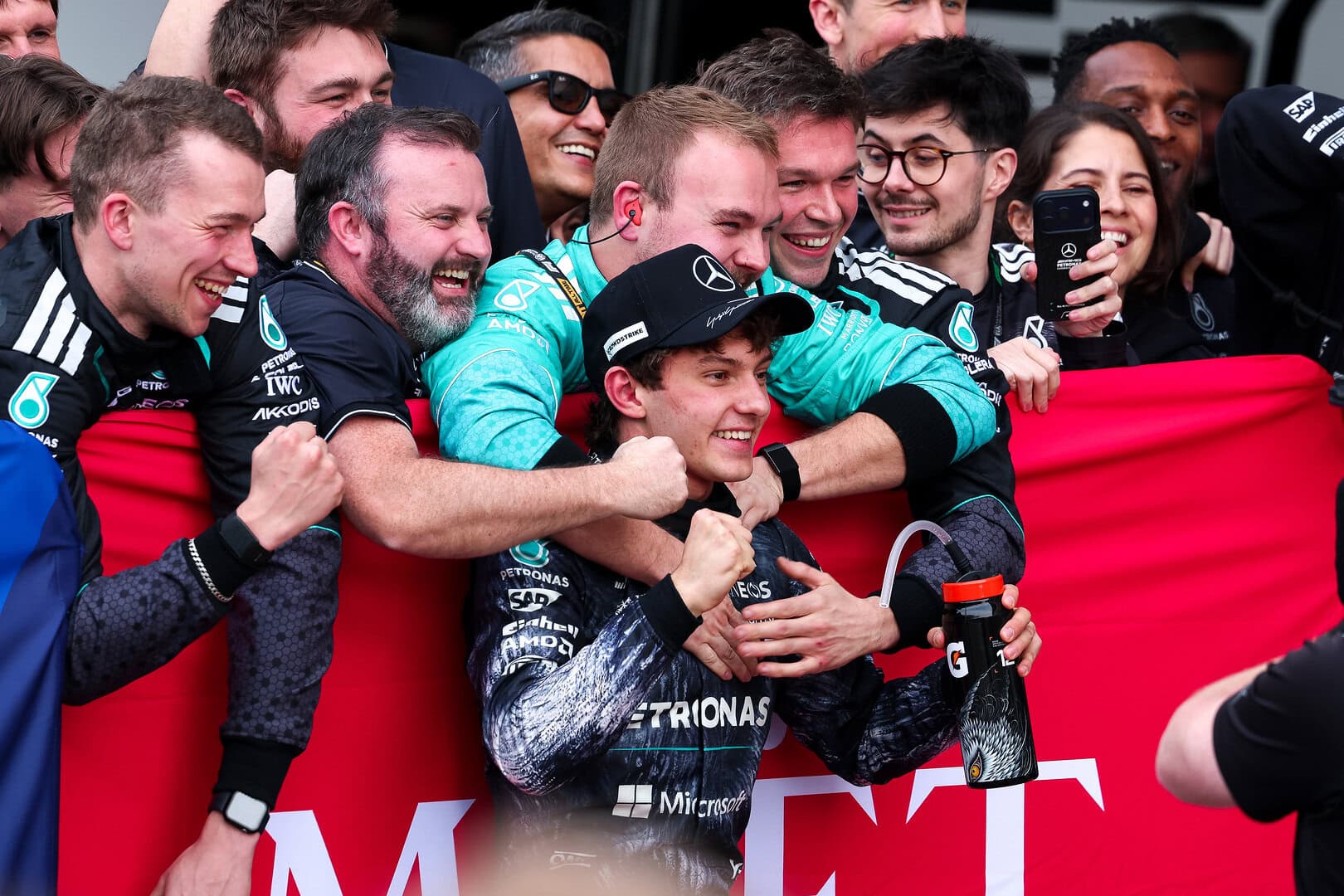
What Is the FIA? The Governing Body Behind F1’s Rules
Formula 1 races in 24 countries across five continents, with cars built by ten different constructors competing under a single set of technical and sporting rules. The organization responsible for writing those rules, enforcing them at every race weekend, and licensing everyone from the drivers to the circuit operators is the Fédération Internationale de l’Automobile, universally referred to by its initials.
What the FIA Is
A Century-Old Organization
The FIA was founded in 1904 as an association of national automobile clubs. Its original purpose was to facilitate international motoring by creating common standards for vehicles crossing national borders. Over the following decades, it took on the role of sanctioning international motor racing events, and in 1950 it formally sanctioned the first Formula 1 World Championship race at Silverstone. Today the FIA represents more than 240 national motoring and motorsport clubs across over 145 countries.
The organization operates as a not-for-profit association. Its members are national clubs, not commercial entities or teams. Governance is divided between the General Assembly, the World Motor Sport Council, and various technical and sporting working groups. The president of the FIA is elected by the General Assembly from candidates proposed by the member clubs. This structure means the FIA’s authority derives from its membership, not from commercial interests in the sport.
The FIA and Commercial Rights: Two Separate Bodies
A common point of confusion is the relationship between the FIA and Formula 1 Management, the commercial rights holder for the championship. FOM handles broadcasting, race promotion, hospitality, and the revenue-generating commercial aspects of Formula 1. The FIA handles governance, regulation, and safety. The two bodies work closely together but are institutionally separate, which means the organization writing the technical rules does not directly benefit from the championship’s commercial success.
This separation has been a source of tension at various points in Formula 1’s history, including periods where the boundary between regulatory authority and commercial authority was contested. The current arrangements, formalized through the Concorde Agreement between the FIA, FOM, and the teams, define how responsibilities and revenues are divided and how changes to the sporting structure must be agreed collectively.
The FIA’s Role in Formula 1
Writing and Publishing the Regulations
The FIA publishes three sets of regulations for Formula 1: the Technical Regulations, which define what the cars can and cannot be; the Sporting Regulations, which govern how races and championships are conducted; and the Financial Regulations, which set the cost cap framework for team spending. Each document is revised periodically, with major revisions typically tied to multi-year regulation cycles. The 2026 Technical Regulations represent one of the most comprehensive rewrites in the sport’s history, touching aerodynamics, the power unit, safety structures, and electronics simultaneously.
Regulations are not written by the FIA in isolation. The F1 Commission brings together representatives of the teams, the power unit manufacturers, FOM, and the FIA. Technical working groups within that structure develop proposals and assess their feasibility through simulation and modeling. The FIA then reviews and ratifies changes through the World Motor Sport Council. The 2026 rules went through multiple rounds of this process over several years before reaching their final published form.
Enforcement at Race Weekends
At each grand prix, the FIA deploys a technical team to enforce compliance. Technical delegates and scrutineers inspect cars before qualifying and after races, checking physical dimensions against reference gauges, verifying safety structure integrity, and examining components against their homologated specifications. The standard ECU provides a continuous data stream that FIA officials can interrogate, and Article 8.2 of the Technical Regulations gives the FIA the right to inspect software and electronics at any time.
Race stewards, appointed by the FIA, adjudicate on sporting matters during a race weekend: contact incidents, pit lane violations, flag infringements, and any irregularity that affects the sporting result. Stewards’ decisions can be appealed to the FIA International Tribunal, an independent judicial body that handles cases requiring more formal examination. The combination of technical scrutineering and sporting stewardship means the FIA is present in both the garage and the race control room throughout every event.
Safety Certification and Circuit Licensing
The FIA’s role extends beyond the cars and the competition. Every circuit that hosts a Formula 1 race must hold a Grade 1 FIA circuit license, the highest classification in the FIA’s grading system. Obtaining and maintaining that license requires compliance with barrier specifications, medical facility standards, marshal training requirements, and run-off area geometry that the FIA specifies and inspects. When a circuit wants to join the calendar or undergo significant modification, the FIA’s circuit inspection process determines whether it meets the required standard.
Driver licensing similarly falls under FIA jurisdiction. Every Formula 1 driver must hold a valid FIA Superlicence, earned through a points system based on results in lower categories of motorsport. The superlicence requirement is a form of sporting qualification that prevents a competitor from simply buying their way onto an F1 grid without having demonstrated the standard of car control the category demands.
How the 2026 Rules Were Developed
The Working Group Process
The 2026 regulations began taking shape from around 2021, when work on post-2025 rules started in earnest alongside the first season under the 2022 aerodynamic framework. The specific goal of producing active aerodynamics, a fundamentally new power unit architecture, and significantly smaller and lighter cars required working groups to tackle aerodynamics, power unit regulations, materials, electronics, and safety simultaneously rather than sequentially.
The process involved hundreds of meetings, shared simulation data between teams and the FIA’s own technical department, and several rounds of revision as early simulation results revealed unintended consequences in specific areas. The fuel regulations, which mandate 100% non-fossil sustainable fuel for the first time in Formula 1’s history, involved parallel work with fuel industry partners to confirm that the required production volumes and supply chains were realistic before the mandate was written into the regulations.
Where to Learn More
For readers looking to understand what the 2026 regulations actually change and why those changes matter for the racing, the 2026 F1 Rules Explained guide covers the complete picture in plain language. The 2026 F1 Regulations Timeline traces how the new rules developed from the initial working group discussions through to the final published Technical Regulations, showing which elements were revised along the way and what drove those revisions.

Comments
More in News

‘We’re getting entertained’, Damon Hill explains why ‘tactical’ racing is putting on a show

Mario Kart in Real Life: Why the 2026 Japanese GP Crash is F1’s Ultimate Warning Sign
‘It’s just not what I want to do’, Max Verstappen admits there is a lot for him to figure out as F1 future decision looms
FIA acknowledge “high closing speeds” contributed to Bearman Japan shunt, but what’s going to change?