
The internal combustion era hasn’t ended; it has simply been demoted to a supporting role in a digital theater. For the massive crowd at Albert Park, the 2026 season opener offered a jarring introduction to Formula 1’s new reality. From the grandstands, the visuals were hallucinogenic: cars appeared to hit a physical wall, decelerating on the fastest sections of the track while drivers remained at full throttle. By the checkered flag, the scoreboard displayed a record-shattering 120 overtakes, yet the gap between the victor and the midfield was nearly a minute.
This is the dawn of the 50/50 hybrid era; a world where cars are smaller and more agile, but performance is dictated by an invisible war of electrons. To look beyond the podium is to see a sport that has successfully solved its “raceability” problem while inadvertently creating a technical hierarchy that may be the steepest in a generation.
The Counter-Intuitive Reality of “Super Clipping”
The defining technical artifact of the 2026 regulations is “super clipping,” a phenomenon that turned the run into Turn 9 and Turn 11 into a graveyard for top speed. Telemetry from the weekend revealed cars losing as much as 50 km/h on straights despite the throttle being pinned to the floor. However, it is essential to distinguish between the show and the simulation: these extreme drops are primarily a Qualifying artifact.
Under the one-lap limit of 7MJ harvesting, the battery often gives up the ghost long before the braking zone. Oscar Piastri’s McLaren, for instance, suffered a violent 57 km/h loss in qualifying as his electrical boost vanished. While this effect is less pronounced during the race, where harvesting limits rise to 8MJ, it has fundamentally altered the driver’s craft.
This isn’t just racing; it’s a tactical deployment of power that has led drivers like Max Verstappen and Charles Leclerc to liken the new era to a high-stakes game of Mario Kart, where the ‘boost’ is a finite resource to be hoarded for the kill.
F1 has moved from a sport of linear acceleration to a game of strategic depletion. Viewers are no longer just watching for the late braker; they are watching for the driver whose battery dies 50 meters later than the car they are hunting.
Mercedes’ Software Moat: Why the Gap is Bigger Than It Looks
George Russell’s victory was a masterclass in modern energy management, but the 50-second gap he held over fifth-place Lando Norris is what should terrify the paddock. While customer teams like McLaren and Williams use the same Mercedes power unit, the works team has built a “software moat” that hardware alone cannot bridge.
The advantage is rooted in platform confidence. Telemetry from the weekend showed Kimi Antonelli’s Mercedes operating with a 14.4% brake share, compared to roughly 11% for his rivals at Ferrari and Red Bull. This indicates a car that is remarkably stable on release; Mercedes can brake later and rotate the car harder, trusting the digital deployment to pull them out of the corner.
This dominance is geographically specific. Telemetry shows Mercedes breaking away from the field at Turn 4, building a massive delta through the mid-lap. Interestingly, Mercedes was actually among the slowest of the top four teams in the final sector through Turn 11, but their ability to consistently harvest and deploy across the lap meant they arrived at the finish line with a regularity that Ferrari and Red Bull simply couldn’t match. With the race harvesting limit rising to 8MJ, Mercedes’ efficiency only becomes more punishing over a full Grand Prix distance.

The Overtaking Paradox: 120 Passes and Zero Parity
The 2026 Australian Grand Prix recorded 120 overtakes, a staggering leap from the 45 seen the year prior. On the surface, the “raceability” mission is a resounding success. However, we are witnessing a paradox: the cars are physically easier to pass, but the field has never been more split.
- Why Overtaking Increased: The 2026 F1 cars are shorter, narrower, and lighter, generating significantly less aerodynamic turbulence. This allows drivers to follow closely through high-speed sections. Furthermore, variable energy recovery windows mean one car may be “recharging” (suffering clipping) while the car behind is in “deployment” (using its boost), creating artificial but spectacular speed deltas.
- Why the Field is Split: Competitive balance is now a prisoner of power unit efficiency and software management. A car can be physically “raceable” due to its smaller dimensions, but if its energy recovery strategy is inferior, it will remain seconds off the pace regardless of how many side-by-side battles it engages in.
The 2026 regulations have returned F1 to an agile, “alive” state reminiscent of the late 2000s, but the digital complexity of the power units has created a hierarchy where spectacle does not necessarily equal competition.
Red Bull’s Identity Crisis in the Corners
The most alarming narrative of the weekend was the fall of the Red Bull RB22. Despite Max Verstappen recording the highest trap speed at 303 km/h, the car is suffering from a crippling identity crisis in the corners.
A deep dive into the telemetry from Free Practice 2 (FP2) revealed a startling weakness: at the 1.09km mark, the circuit’s heavy stop, Verstappen was getting back to full power roughly 120 meters later than his rivals at Mercedes and Ferrari. He reaches the same apex minimum speeds, but the car simply won’t allow him to commit to the throttle early, suggesting a narrow operating window and significant corner-entry instability.
This “nervous” behavior was corroborated by an alarming 0.575s intra-team gap between Verstappen and Isack Hadjar during the Friday sessions. In an era where Mercedes covered their drivers within 0.106s, Red Bull’s massive spread suggests a car that is notoriously difficult to set up. They have the straight-line speed, but they are giving it all back in the traction zones.
Conclusion: A Digital Sport in a Physical World
The 2026 era has officially arrived, and it has proven that energy management is now as critical as aerodynamics once was. The record-breaking action at Albert Park provided a vivid, high-speed show, but it functioned as a curtain hiding a lopsided title race.
Formula 1 has succeeded in making its machinery feel “alive” again: agile cars that can dance side-by-side through the corners of Melbourne. Yet, the 50-second chasm at the front suggests that the “software advantage” found by Mercedes might be the most difficult lead to close in the sport’s history. As we look toward the rest of the season, the question remains: is the field chasing a car, or are they chasing a ghost in the machine?
Want more F1Chronicle.com coverage? Add us as a preferred source on Google to your favourites list for the best F1 news and analysis on the internet.
From F1 news to tech, history to opinions, F1 Chronicle has a free Substack. To deliver the stories you want straight to your inbox, click here.
For more F1 news and videos, follow us on Microsoft Start.
New to Formula 1? Check out our Glossary of F1 Terms, and our Beginners Guide to Formula 1 to fast-track your F1 knowledge.

Comments
More in News
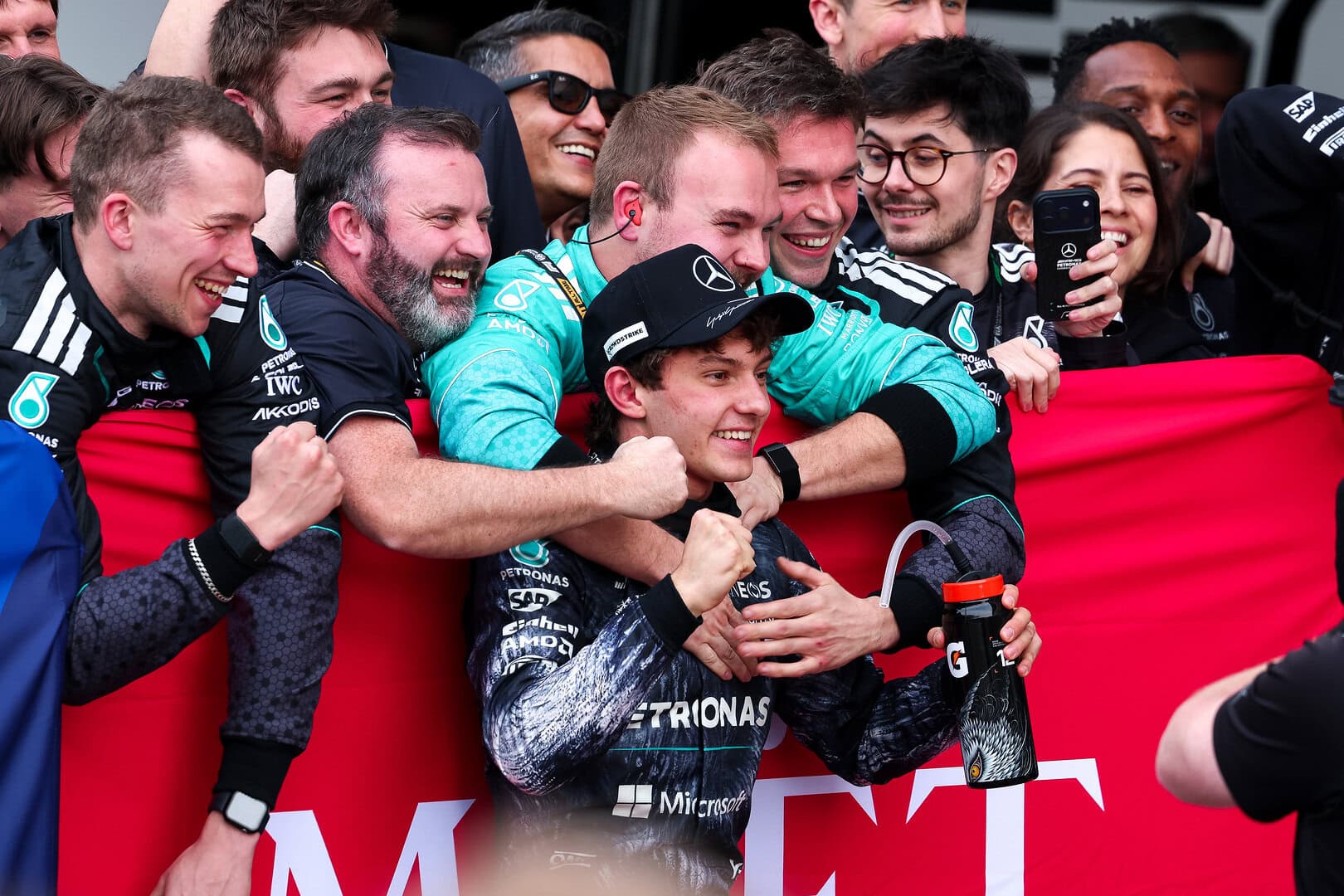
Kimi Antonelli: ‘It’s too early to think about the championship’
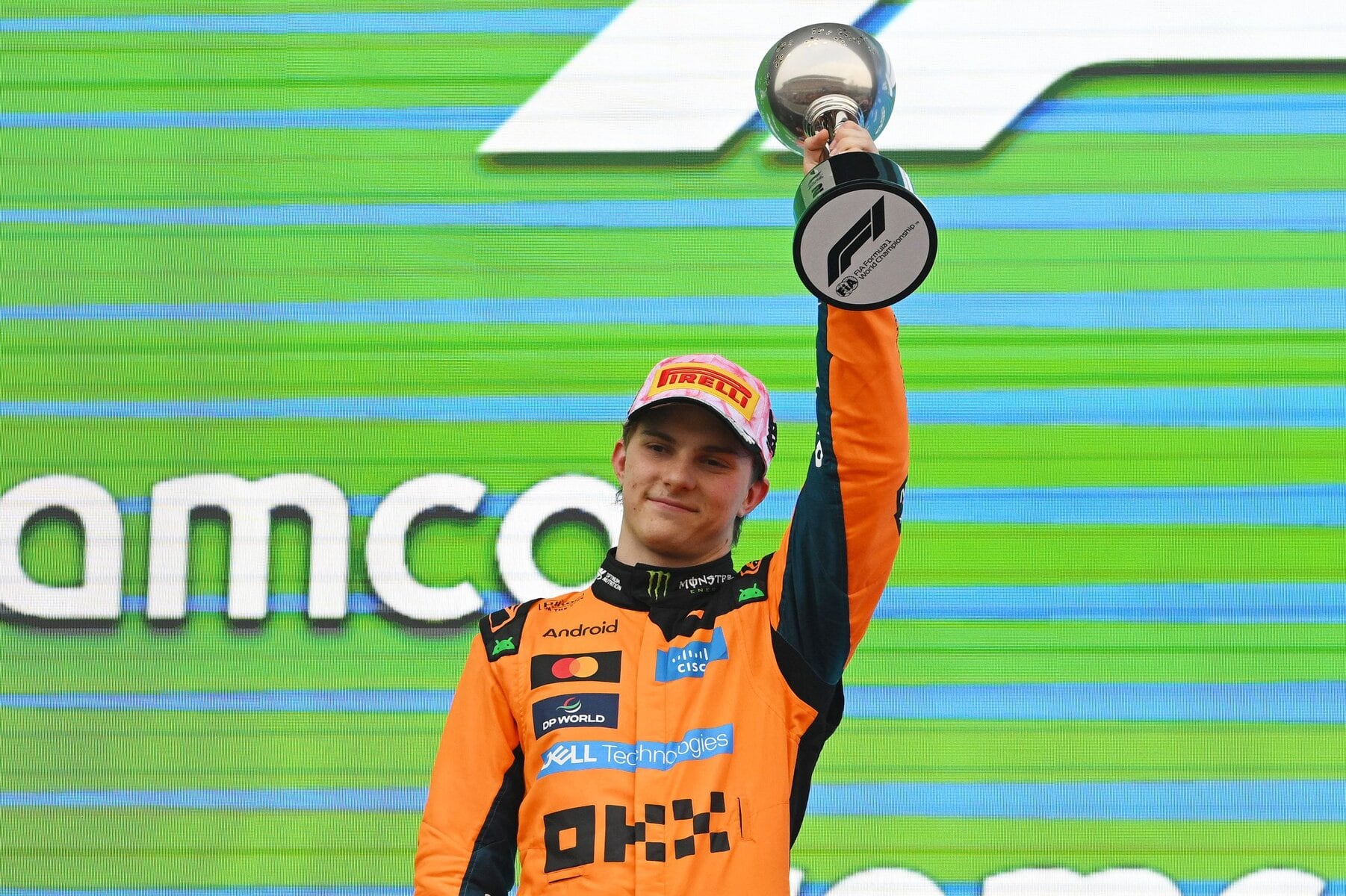
Oscar Piastri: ‘We did everything right and still got beaten by 15 seconds’
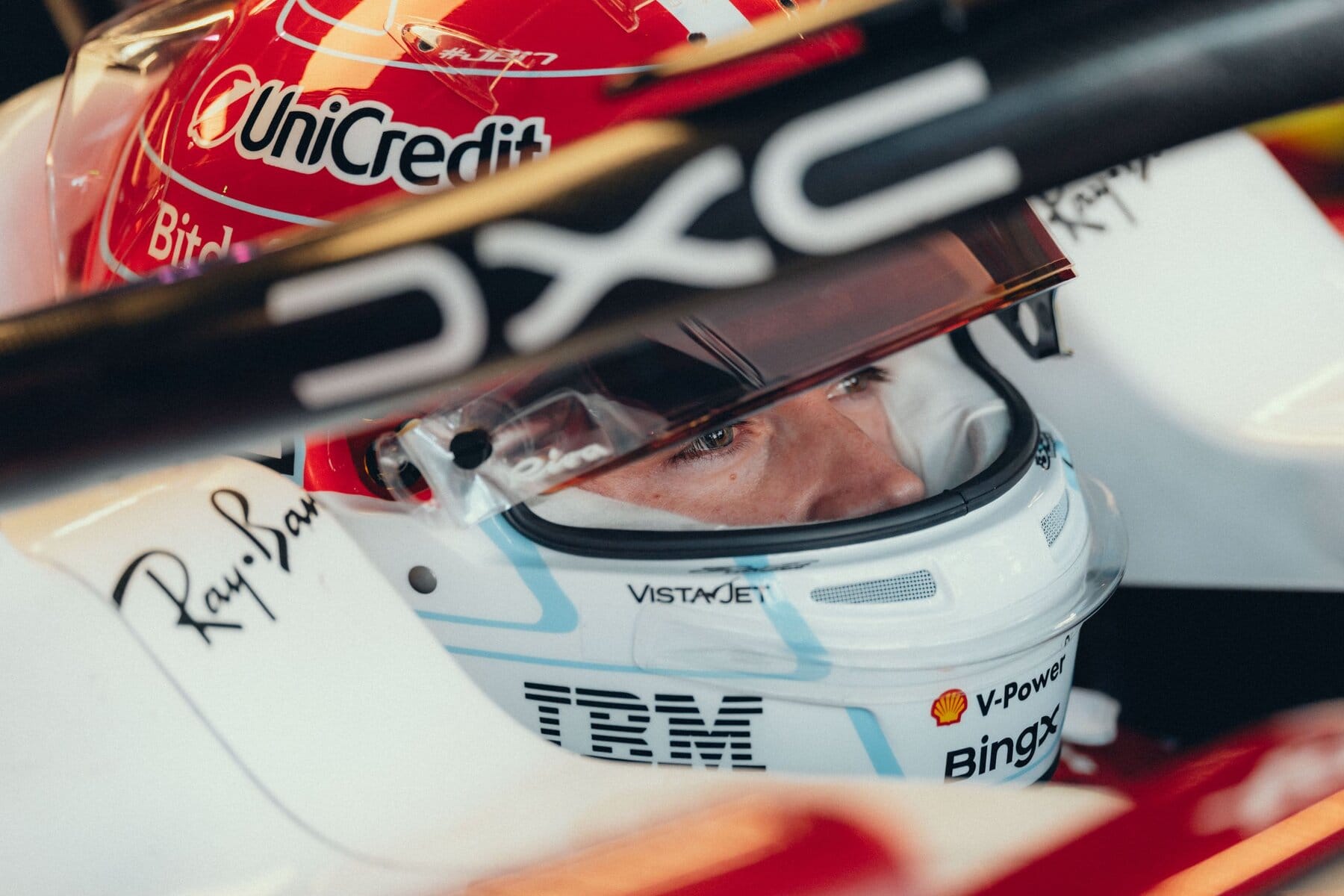
Charles Leclerc: ‘The power unit is maybe our main weakness’

Kimi Antonelli Dominates In Japan, Takes Championship Lead
