
How Much Money Do Formula 1 Drivers Make?

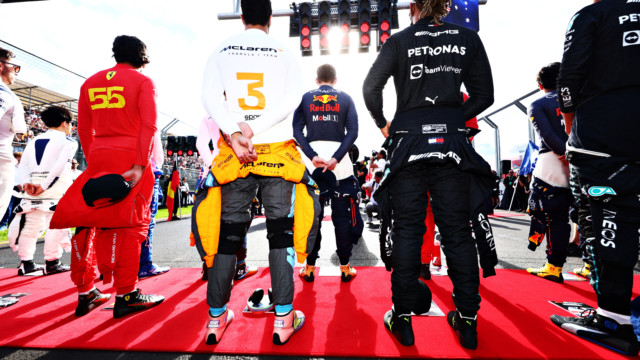
How much money do Formula 1 drivers make in 2026? Estimates put the range anywhere from around half a million dollars a season for a rookie to upwards of $75 million for the best-paid names on the grid. None of it is official, since F1 does not publish driver pay, so every figure in this article is an outside estimate, attributed to whoever produced it and dated to when they did.
- The best-paid driver in F1 right now is estimated at more than $75 million a season, according to Forbes’ most recent ranking, with a handful of others clearing $25 million.
- A rookie on the 2026 grid is estimated to earn as little as $500,000 to $1 million, a gap of well over a hundred times the top of the market.
- Driver pay, along with the three highest-paid non-driver staff at each team, sits entirely outside Formula 1’s $215 million team cost cap.
How Much Do F1 Drivers Make In 2026?
The top of the market is a small cluster clearing $30 million a season. Forbes put Max Verstappen at $76 million for 2025 in a December 2025 ranking, split as $65 million in salary and $11 million in bonuses. Lewis Hamilton followed at $70.5 million, almost all of it fixed salary.
Verstappen’s figure has its own moving parts, and what Max Verstappen makes across salary, bonuses and endorsements runs well past the retainer alone.
Lando Norris and Oscar Piastri, both at McLaren, sat at $57.5 million and $37.5 million respectively, and Charles Leclerc at $30 million.
The midfield band runs roughly $6 million to $27 million. Forbes puts Fernando Alonso at $26.5 million and George Russell at $26 million.
GiveMeSport’s broader grid estimate, published in January 2026 and updated in June, puts Lance Stroll and Carlos Sainz around $13 to $13.5 million each, Kimi Antonelli near $12.5 million, Pierre Gasly around $12 million, Alex Albon around $8 million and Nico Hulkenberg around $7 million.
The rookie and backmarker floor sits well below that. GiveMeSport estimates Esteban Ocon around $6 million, Sergio Perez, Valtteri Bottas and Isack Hadjar around $5 million each, Franco Colapinto and Liam Lawson around $3 million each, and Gabriel Bortoleto and Oliver Bearman around $2 million each. Arvid Lindblad, the grid’s only rookie for 2026, sits at an estimated $500,000 to $1 million.
Who Is The Highest Paid F1 Driver?
By Forbes’ most recent count, published in December 2025 and updated the following month, Max Verstappen is the highest-paid driver on the grid, at an estimated $76 million for the 2025 season. Lewis Hamilton sits close behind at $70.5 million, notable for being almost entirely fixed salary rather than performance bonuses, a different shape of deal to Verstappen’s.
Behind that pair, Lando Norris at $57.5 million and Oscar Piastri at $37.5 million round out the top four, both McLaren drivers whose totals lean heavily on bonuses earned through a strong 2025 season. Charles Leclerc, at an estimated $30 million, completes the top five.
Hamilton’s Ferrari retainer is only part of a financial picture spanning endorsements and business ventures that runs well past his on-track pay.
What Does Every F1 Driver Earn In 2026?
Red Bull pairs Max Verstappen, at an estimated $76 million per Forbes, with Isack Hadjar, estimated by GiveMeSport at around $5 million. Ferrari fields Charles Leclerc at an estimated $30 million alongside Lewis Hamilton at an estimated $70.5 million, both Forbes figures.
McLaren runs Lando Norris at an estimated $57.5 million and Oscar Piastri at $37.5 million, both per Forbes. Mercedes pairs George Russell, estimated by Forbes at $26 million, with Kimi Antonelli at an estimated $12.5 million.
Aston Martin fields Fernando Alonso at an estimated $26.5 million and Lance Stroll at $13.5 million, both Forbes figures. Williams runs Carlos Sainz at an estimated $13 million, per Forbes, alongside Alex Albon, estimated by GiveMeSport at around $8 million.
Alpine pairs Pierre Gasly, estimated by GiveMeSport at around $12 million, with Franco Colapinto at around $3 million. Haas fields Esteban Ocon at an estimated $6 million and Oliver Bearman at around $2 million, both GiveMeSport figures.
Audi runs Nico Hulkenberg at an estimated $7 million and Gabriel Bortoleto at around $2 million, both per GiveMeSport. Racing Bulls pairs Liam Lawson, estimated at around $3 million, with rookie Arvid Lindblad at an estimated $500,000 to $1 million, both GiveMeSport figures.
Cadillac, the grid’s newest team, fields Valtteri Bottas and Sergio Perez, both estimated by GiveMeSport at around $5 million as they rebuild their careers with a first-year outfit.
Team principal Graeme Lowdon was explicit about why Cadillac chose two experienced veterans over rookies for its debut season, telling reporters in August 2025 that “they’ve seen it all and they know what it takes to succeed in Formula 1,” adding that “more importantly, they understand what it means to help build a team.” Between them, Bottas and Perez have started 527 grands prix.
How Do F1 Driver Contracts Actually Pay?
A driver contract is built in layers, not a single number. The base retainer is fixed and negotiated upfront, and it is often the smaller half of what a top driver actually earns in a given year. Forbes’ own breakdown makes the point plainly: Norris earned $18 million in base salary in 2025 against $39.5 million in bonuses, and Piastri $10 million in salary against $27.5 million in bonuses, both figures driven by a season of race wins and championship points.
Hamilton’s deal runs the other way. His $70.5 million Forbes figure was almost entirely fixed salary, with only $0.5 million counted as bonus, reflecting a contract structured around guaranteed pay rather than results.
Personal sponsorship sits as a separate layer again, negotiated by the driver rather than the team, and it does not appear in most salary estimates at all. A driver’s helmet, race suit and personal social media presence typically carry endorsement deals the team has no claim on, which is one reason total earnings and team salary are not the same figure, and why a driver’s broader net worth, as with Hamilton’s, has to be worked out separately from his on-track pay packet.
Bonus-heavy contracts exist because a driver’s results feed straight back into what a team earns. Formula 1 distributes prize money to teams weighted heavily toward final position in the constructors’ championship, so a driver capable of dragging a team a place or two higher up that table is, in a very direct sense, earning his own bonus back for the team several times over.
One cost runs the other way entirely. Every driver pays the FIA directly for a super licence, calculated as a base fee plus a charge for every championship point scored the previous season. GiveMeSport reported in December 2025 that the 2026 formula sits at €11,842 plus €2,392 per point, which means the driver who wins the title pays the FIA the most for the privilege of doing it again.
Lando Norris’s 423 points from his 2025 championship put his 2026 super licence bill at roughly €1.02 million, ahead of Max Verstappen’s, also roughly €1.02 million, making both men members of what GiveMeSport dryly called an exclusive million-euro club.
Why Don’t Driver Salaries Count Against The Cost Cap?
Formula 1’s cost cap, $215 million a year for 2026, is aimed at what a team spends developing and running its car, not at what it pays the person driving it. Driver salaries and the three highest-paid non-driver staff at each team sit entirely outside that figure, a carve-out confirmed on F1Chronicle’s own breakdown of team economics.
The logic behind the exclusion is closer to how a sports league treats a star’s personal value than how it treats an engineering budget. Max Verstappen made the drivers’ side of that argument directly when a driver salary cap was floated: “why should the drivers, with their IP rights and everything, be capped, who actually bring the show and put their lives at risk?”
Capping car development spending controls a genuine competitive arms race between engineering departments. Capping what a team pays for a proven race winner controls something closer to an individual’s market value, which is a different problem entirely.
How Much Do F1 Rookies Make?
Arvid Lindblad, Racing Bulls’ 18-year-old, is the only genuine rookie on the 2026 grid, and GiveMeSport puts his estimated pay at $500,000 to $1 million for the season, the bottom rung of the entire grid.
That figure sits well below what a driver earns just one season into their career. Oliver Bearman and Gabriel Bortoleto, both now in only their second full seasons, are already estimated at around $2 million each, double a rookie’s likely floor. The pattern holds further up the grid too: a driver’s market value tends to move fastest in the years immediately after they prove they belong on the grid, not before it.
A rookie’s low starting pay reflects a career that is still being subsidised rather than one earning its own way. Lindblad joined Red Bull’s junior driver programme in 2022 and was fast-tracked through it, becoming the youngest race winner and pole-sitter in Formula 2 history in 2025 alone, according to Motor Sport Magazine.
He was young enough to need a specific FIA exemption to even hold a super licence, granted in June 2025, a few months before his 18th birthday, on the basis that he had “recently and consistently demonstrated outstanding ability and maturity in single-seater formula car competition.” A junior programme like Red Bull’s effectively pre-pays a driver’s development for years before that driver ever earns an F1 salary at all, which is part of why the F1 pay cheque itself starts so low.
Are F1 Driver Salaries Ever Official?
No. Formula 1 has never published driver salaries, and no team publicly confirms an individual figure. Every number that exists anywhere, including every one in this article, is somebody else’s estimate.
Forbes describes its own process plainly: figures are “based on financial documents, legal filings and press reports, as well as conversations with industry insiders,” not a released contract value. Other outlets work from similar raw material, comparing team budget filings against the cost cap, cross-referencing sponsor announcements, and talking to people close to a given negotiation, rather than being handed a number by the team or driver involved.
That is exactly why this article names an estimator and a date on every figure rather than presenting any of them as fact. A number with no name attached to it is not more reliable for being unattributed, it is just less honest about being a guess.
Want more F1Chronicle.com coverage? Add us as a preferred source on Google to your favourites list for the best F1 news and analysis on the internet.
For more F1 news and videos, follow us on Microsoft Start.
New to Formula 1? Check out our Glossary of F1 Terms, and our Beginners Guide to Formula 1 to fast-track your F1 knowledge.
Sources
- Formula 1’s Highest-Paid Drivers 2025 – Forbes
- Cadillac F1 Team Signs Valtteri Bottas And Sergio Perez For 2026 – Forbes
- Max Verstappen: Formula One world champion says introducing a driver salary cap would be “completely wrong” – Sky Sports
- A Definitive Guide to Understanding the F1 Cost Cap – Global Sports Advocates
Article reviewed and updated by Jack Renn, August 2026.
More F1 Reading
- What Does an Exclamation Mark Next to a Driver’s Name Mean in F1?
- How F1 Fans Can Join The Spirit Of Competition From Home
- Apple Secures Exclusive Formula 1 Rights As Services Revenue Hits Record High
- Derek Warwick Suspended From Canadian GP Stewarding Duties

Comments
More in News

Aston Martin Announces Replacement as Lance Stroll Set To Miss Mexico GP FP1

Cadillac Shares Major Update on Its General Motors Engine Factory Timeline

Christian Horner Reveals How Misconduct Allegations Affected His Marriage With Geri Halliwell

“He’s on a Discovery Mission” – Toto Wolff Reveals Kimi Antonelli’s Unusual Mindset on the Verge of Championship Glory
