
How Luxury Watches Conquered Formula 1: From 1969 to the $1.5 Billion LVMH Deal
- TAG Heuer returned as F1’s Official Timekeeper in 2025 through a 10-year LVMH deal worth a reported $1.5 billion, the largest commercial partnership in the sport’s history.
- Eight of eleven teams on the 2026 grid carry a luxury watch partner, with Richard Mille sponsoring both Ferrari and McLaren simultaneously.
- What started as Jack Heuer placing a logo on Jo Siffert’s Lotus in 1969 has turned luxury watchmaking into F1’s dominant sponsorship category, with total grid spending on watch partnerships now running into the hundreds of millions per season.
How a Handshake in 1969 Built a Billion-Dollar Industry
Formula 1 and luxury watches share a relationship that traces back more than five decades to a handshake between a Swiss watch executive and a racing driver from Fribourg. In 1969, Jack Heuer placed his family company’s logo on Jo Siffert’s Rob Walker Lotus 49B, creating the first luxury brand sponsorship in Formula 1 history. That single deal spawned an entire category of motorsport marketing. By 2025, LVMH had committed a reported $1.5 billion over ten years to bring TAG Heuer back as the sport’s Official Timekeeper, and eight of the eleven teams on the 2026 grid carry a luxury watch brand on their cars and their drivers’ wrists.
The relationship between F1 and horology has always run deeper than billboard space. Timing down to the thousandth of a second is foundational to the sport itself, and the watch industry recognised early on that a Formula 1 car offered something no other advertising platform could: a direct, visceral connection between engineering excellence and the product on a customer’s wrist.
Jack Heuer, Jo Siffert, and the Autavia That Started Everything
Before corporate sponsorship was standard practice in Formula 1, the cars wore the colours of their national racing teams and little else. Jack Heuer changed that in 1969 when he approached Jo Siffert, a Swiss privateer competing with Rob Walker’s team, with a proposition that had never been tried in the sport. Siffert would wear the Heuer shield on his racing suit, display the logo on his Lotus 49B, and sport a reference 1163 Autavia with a white dial powered by the brand-new Calibre 11, widely considered the first automatic chronograph movement.
Siffert was such a convincing ambassador that he persuaded many of his fellow competitors to wear the same watch. At the height of the partnership, the majority of F1 drivers in the paddock wore a Heuer Autavia. The effect on Heuer’s sales and brand recognition was immediate, and it established a template that every luxury watch brand operating in F1 today still follows: attach your product to the fastest, most visible athletes in the world and let the association do the selling.
Heuer’s involvement went beyond branding. From 1974 through the late 1970s, the company provided the actual timing equipment for Formula 1 races. The Heuer Centigraph HL205 quartz timer powered the ACIT (Automatic Car Identification Technology) system, which placed transponders in each car to deliver timing accurate to a thousandth of a second. This was the last period in which the official timekeeper performed genuine timing duties rather than serving as a commercial sponsor.
From Longines to Rolex: How F1 Timekeeping Became a Billion-Dollar Sponsorship
The role of Official Timekeeper became a formal commercial position in 1982 when Longines took on the title alongside Italian computing company Olivetti. Longines held the role for a decade through the 1991 season, and while the brand never produced dedicated F1 watches, its association with Scuderia Ferrari during this period resulted in several co-branded timepieces.
TAG Heuer succeeded Longines in 1992 and held the position through 2003, overseeing more than 175 Grands Prix. By this point, Heuer had been acquired by Techniques d’Avant Garde and rebranded as TAG Heuer. The Formula 1 watch line became one of the most commercially successful collections in the brand’s catalogue, and certain models carried “Official Timekeeper of the FIA F1 World Championship” on their casebacks.
Hublot entered the picture in 2010 as the Official Watchmaker of Formula 1, a role it held until 2012. The brand’s King Power F1 collection became a paddock fixture, and Hublot’s advertising campaign featuring Bernie Ecclestone’s bruised face after a mugging, captioned “See what people will do for a Hublot,” became one of the most talked-about watch ads of the decade.
Rolex took over as Official Timekeeper and Official Timepiece in 2013, pairing the title with a Global Partner designation. Rolex’s approach was characteristically understated compared to Hublot’s. The brand never produced any officially co-branded F1 watches, instead relying on pit lane clocks, trackside signage, and longstanding ambassador relationships with figures like three-time champion Sir Jackie Stewart. Rolex remained in the role until the end of the 2024 season.
TAG Heuer Returns: The $1.5 Billion LVMH Deal
On 2 October 2024, Formula 1 and LVMH announced a 10-year global partnership beginning with the 2025 season. TAG Heuer returned as Official Timekeeper for the first time since 2003, and the deal extended across multiple LVMH brands, including Louis Vuitton and Moet Hennessy.
The financial scale was unprecedented. Fortune reported the agreement at approximately $150 million per year, putting the total value at roughly $1.5 billion over the life of the contract. For context, that sum exceeds what most F1 teams spend on car development across the same period. TAG Heuer also became the first title sponsor of the Monaco Grand Prix, a race the brand has been culturally associated with since the 1960s through its iconic Monaco chronograph.
The brand’s DNA is inextricable from motor racing. The Autavia (a portmanteau of “automobile” and “aviation”), the Carrera (named after the Carrera Panamericana road race), and the Monaco all draw their identities directly from the track. TAG Heuer’s return felt like a homecoming for a brand that had never truly left the sport’s cultural DNA.
Every 2026 F1 Team Watch Partnership
The 2026 season features eleven teams for the first time in modern F1 history, following Cadillac’s entry as a new constructor. Eight of those teams carry a luxury watch partnership, and the grid’s horological allegiances shifted considerably from 2025.
Richard Mille holds the most prominent position of any single watch brand on the grid by sponsoring both Ferrari and McLaren simultaneously. For Ferrari, the collaboration produced the RM UP-01, the thinnest mechanical watch ever made at 1.75mm, priced at $1.88 million and limited to 150 pieces. McLaren’s partnership produced a custom RM 67-02 that defending World Champion Lando Norris wears in race-week commitments.
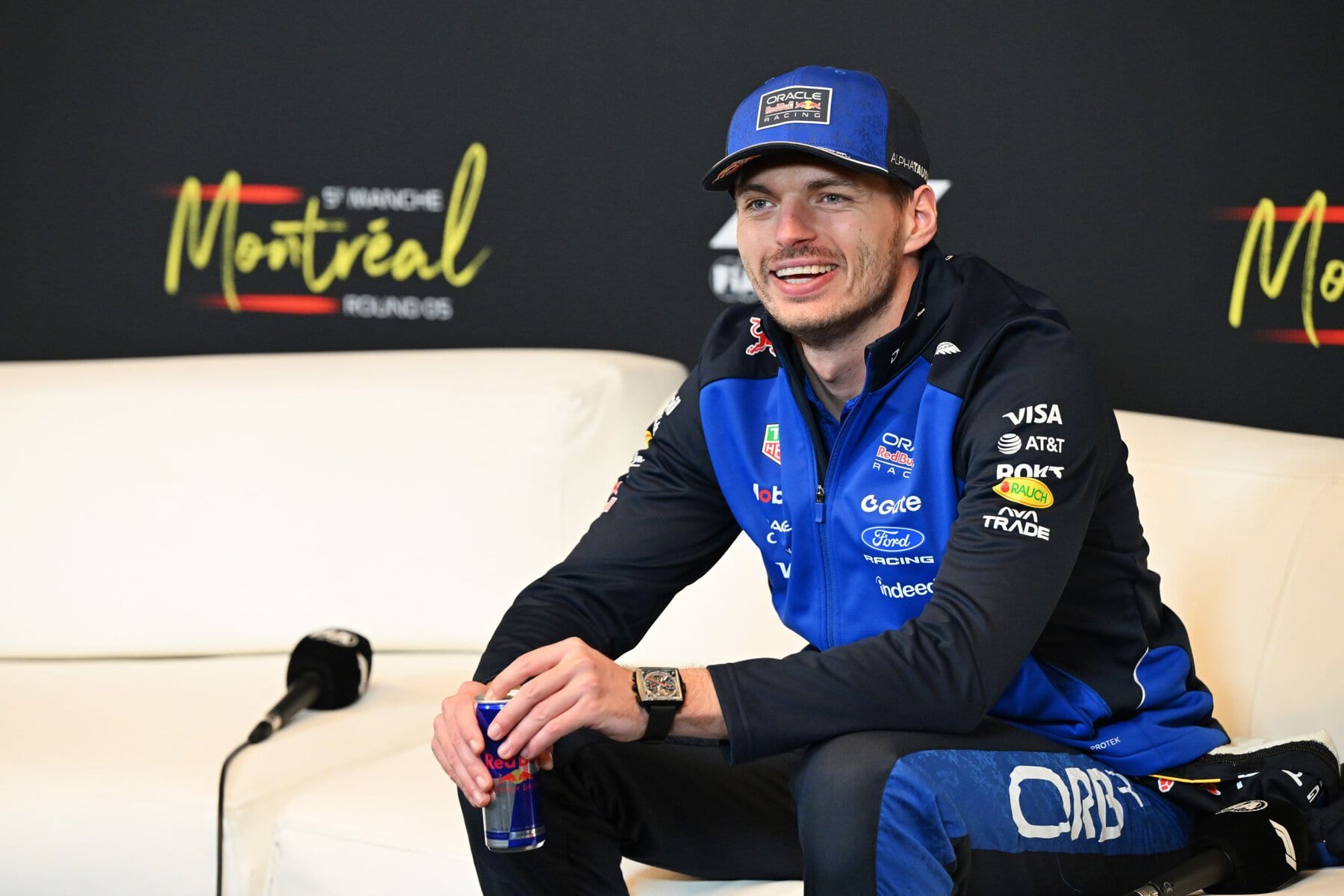
TAG Heuer partners with Oracle Red Bull Racing, where Max Verstappen has worn TAG Heuer watches such as the Monaco Skeleton and a gold Carrera Chronograph across multiple seasons. The brand also holds the broader F1 timekeeping contract, giving it visibility at every circuit.
IWC continues with Mercedes-AMG PETRONAS in a partnership that predates Lewis Hamilton’s departure to Ferrari. George Russell received his first personal collaboration piece for 2026, the Pilot’s Watch 41 Chronograph George Russell, in black ceramic with blue accents matching his helmet. Kimi Antonelli, the youngest driver on the grid, wears the team’s Pilot’s Watch Mark XX.
H. Moser & Cie., the independent Swiss brand better known in collector circles than mass-market advertising, partners with Alpine. Pierre Gasly’s personal involvement with the brand produced the Streamliner Tourbillon Pierre Gasly Edition in October 2025, available as a Sport-Chic version limited to 100 pieces at $98,500 and a Collector’s Edition of just 10 pieces at $148,500 in 5N red gold.
Tudor sponsors Racing Bulls, providing Black Bay models to Liam Lawson and 18-year-old rookie Arvid Lindblad. Lawson’s signature piece is the Black Bay Chrono Pink, matching the pink accent he uses on his helmet.
The biggest sponsorship change for 2026 involved Aston Martin, which replaced Girard-Perregaux with Breitling. The new partnership plays on a shared cultural touchpoint: both a Breitling wristwatch and an Aston Martin DB5 appeared in the James Bond film Thunderball. Lance Stroll has already been photographed wearing the collaboration Navitimer B01 Chronograph, while Fernando Alonso occupies a unique position as a personal Richard Mille ambassador who occasionally wears the team watch for official photos.
Williams signed Girard-Perregaux as its Official Watch Partner ahead of 2026, with Carlos Sainz and Alex Albon wearing the Laureato in team shoots. Three teams operate without confirmed watch sponsors for 2026: Audi (formerly Kick Sauber), Haas, and Cadillac. The new Cadillac team, featuring Sergio Perez and Valtteri Bottas, entered without a watch partnership, though both drivers brought personal collections from their previous teams.
What F1 Drivers Actually Wear Away From the Grid
Sponsored or not, several drivers on the 2026 grid are genuine watch collectors whose personal taste extends well beyond their contractual obligations.
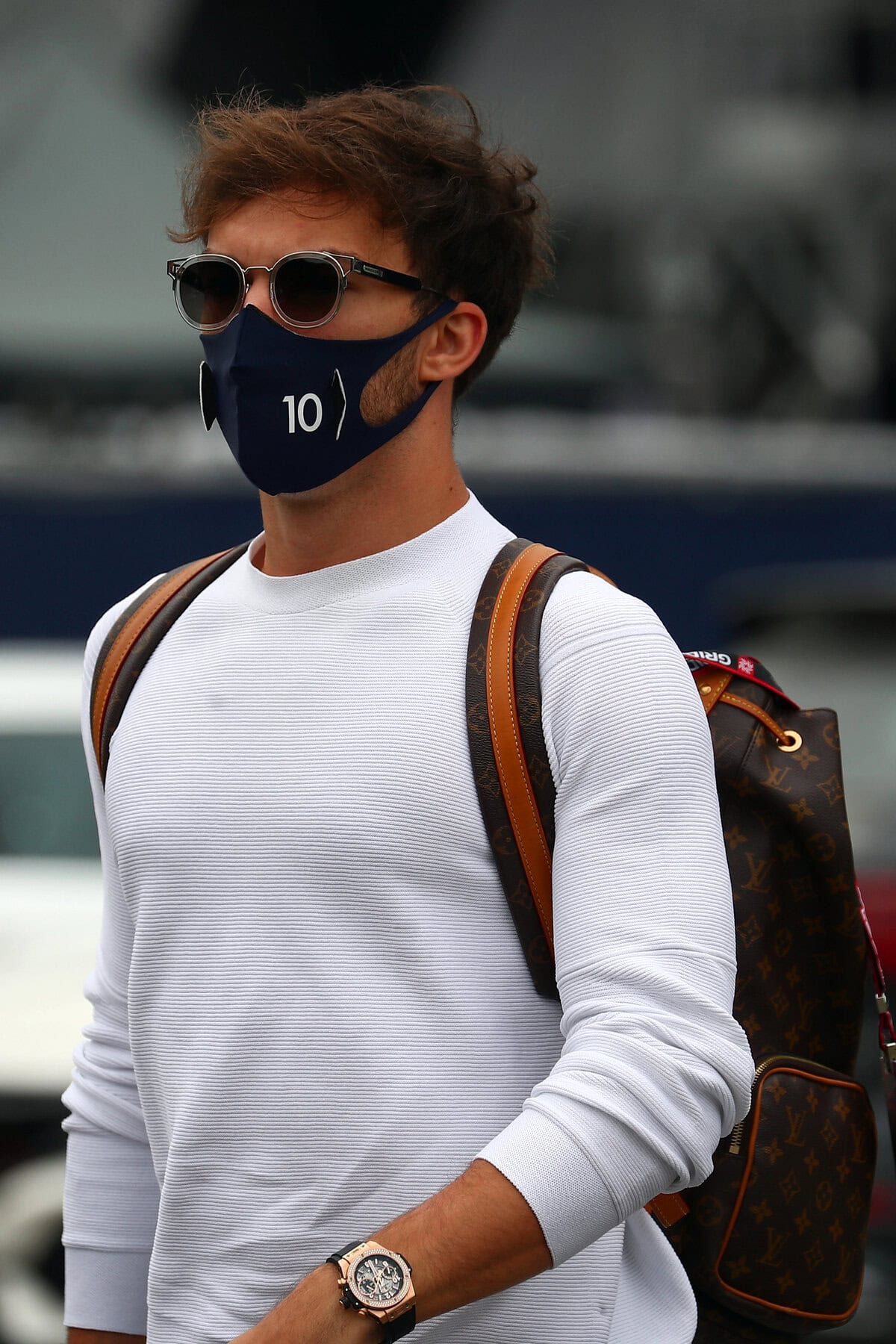
Pierre Gasly has developed a reputation as the most eclectic watch enthusiast in the paddock. Before his current Alpine partnership with H. Moser & Cie., Gasly was photographed wearing Hublot watches in rose gold, a tourbillon-equipped TAG Heuer Carrera, a steel Cartier Santos, and a blue-dialled Audemars Piguet Royal Oak in 41mm. His social media reads more like a watch enthusiast’s rotation than a marketing brief, and his willingness to fight for his design preferences on the Moser Streamliner Tourbillon collaboration shows in the finished product. The chocolate fume dial and warm red gold case were Gasly’s choices, not the brand’s defaults, and the result is a genuine collaboration rather than a logo exercise.
Nico Hulkenberg, now at Audi, has the deepest personal collection of any current driver. Without a team watch sponsor to restrict him, Hulkenberg rotates through rose gold Royal Oaks, brightly coloured Royal Oak Offshores, Patek Philippe Nautilus models, and what appears to be a favourite: a rose gold Rolex Daytona on a black Oysterflex bracelet.
Lando Norris bridges the sponsored and personal collector worlds more than most. While his Richard Mille duties keep the RM 72-01 and RM 67-02 on his wrist during race weekends, Norris has been spotted wearing a rose gold Rolex Daytona and an Audemars Piguet Royal Oak Offshore Music Edition on an orange rubber strap. The strap swap is a telling detail. The Offshore comes with a blue strap as standard, and switching to papaya orange suggests someone who treats his watches as personal accessories rather than contractual obligations.
Lewis Hamilton’s horological journey mirrors his career moves. His decade-long partnership with IWC produced three significant collaboration pieces: the Ingenieur Chronograph in titanium (2014), the Big Pilot’s Watch Perpetual Calendar in black ceramic and burgundy (2019), and the Portugieser Tourbillon Retrograde Chronograph in platinum with a teal dial (2023), limited to just 44 pieces, reflecting his racing number.
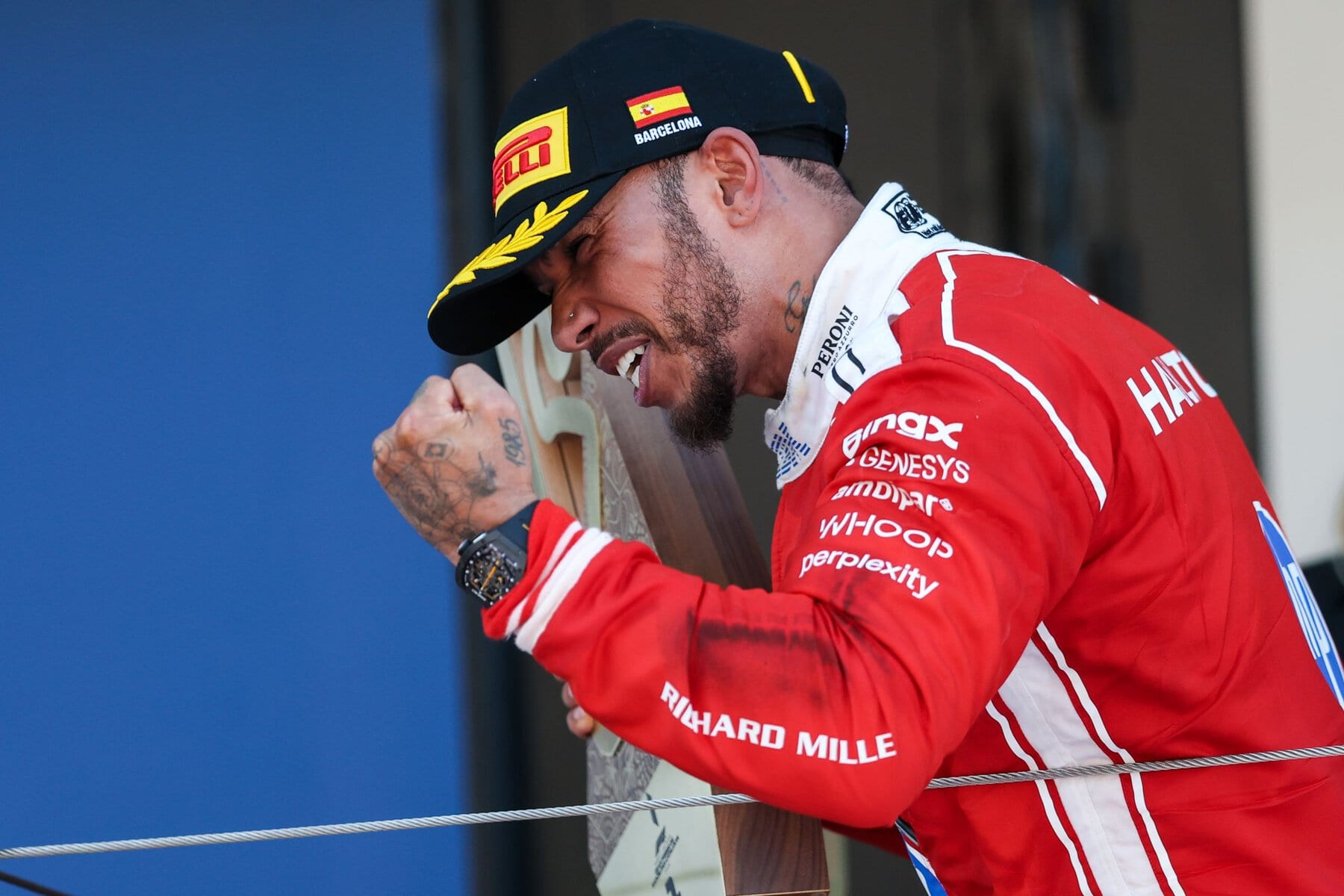
Since joining Ferrari and Richard Mille, Hamilton has been seen wearing the RM 43-01 Tourbillon Split-Seconds Chronograph Ferrari, a watch that combines two of haute horology’s most prestigious complications. Before any of these partnerships, Hamilton was photographed wearing a Patek Philippe Nautilus Travel Time Chronograph 5990/1R, suggesting his taste runs independently of any brand deal.
Alex Albon at Williams, free from watch sponsor obligations, gravitates toward the Cartier Santos with a green dial. Liam Lawson at Racing Bulls owns at least two Rolex Daytonas of his own alongside the Tudors he wears for team duties. And Jack Doohan, who raced for Alpine in 2025, preferred a steel Daytona over his team-issued H. Moser.
The Rarest F1 Watches Ever Made
Certain watches created through F1 partnerships are so limited that they will likely never appear on the secondary market.
Sergio Perez’s TAG Heuer Carrera Tourbillon is the most exclusive by production volume. Only two examples were produced in November 2021 to mark the Mexico City Grand Prix. The 45mm titanium case with DLC coating and rose gold accents houses the Heuer 02T tourbillon manufacture movement. One watch went to Perez personally, featuring his initials “SP” on the dial and his motto “Never Give Up” engraved on the caseback. The second was auctioned for the Checo Perez Foundation.
Fernando Alonso’s Richard Mille RM 47 Tourbillon represents a different kind of rarity. Limited to 75 pieces, the watch took nearly four years to develop and draws on Alonso’s passion for Japanese martial arts. Each dial features a miniature samurai suit of armour hand-carved and painted in 3N yellow gold by artisans Pierre-Alain and Valerie Lozeron. The armour requires 16 hours of engraving and 9 hours of painting per watch, with details referencing the Asano clan and the Bushido code. Secondary market prices now exceed $1 million, driven as much by the craftsmanship as by Alonso’s personal connection to the piece.
The Richard Mille RM UP-01 Ferrari holds a record of its own. At just 1.75mm thick, it became the thinnest mechanical watch in the world when it launched in 2022, beating Bulgari’s Octo Finissimo Ultra by five hundredths of a millimetre. Limited to 150 pieces at $1.88 million each, the watch was a technical showcase for the Ferrari x Richard Mille partnership. The RMUP-01 movement inside measures just 1.18mm, and unlike competing ultra-thin designs that use the caseback as a baseplate, Richard Mille assembled the movement inside a conventional (if spectacularly thin) case.
Pierre Gasly’s H. Moser & Cie. Streamliner Tourbillon Collector’s Edition sits at the rarer end of the spectrum. Just 10 pieces exist, each in 5N red gold with a matching bracelet and a ruby index at 10 o’clock as a nod to Gasly’s racing number. At $148,500, it sold out quickly.
Hamilton’s IWC Portugieser Tourbillon Retrograde Chronograph deserves mention here too. The platinum case, teal dial, and tourbillon complication already put it in rarefied territory, but the limitation to 44 pieces, matching Hamilton’s racing number, makes it almost impossible to find on the secondary market.
When F1 Drivers Wear a $260 Watch Instead
For all the six and seven-figure timepieces floating around the paddock, several drivers provide a counterpoint that humanises the grid.
During the 2025 season, Yuki Tsunoda was regularly photographed wearing the Pluto variant of the Swatch x Omega MoonSwatch, a $260 Bioceramic tribute to the Omega Speedmaster Professional. Tsunoda’s choice was striking because his Racing Bulls team had Tudor as its watch sponsor at the time, meaning a Black Bay Ceramic was available to him at no cost. He eventually wore the Tudor for team events, but the MoonSwatch was clearly his personal preference for off-duty appearances.
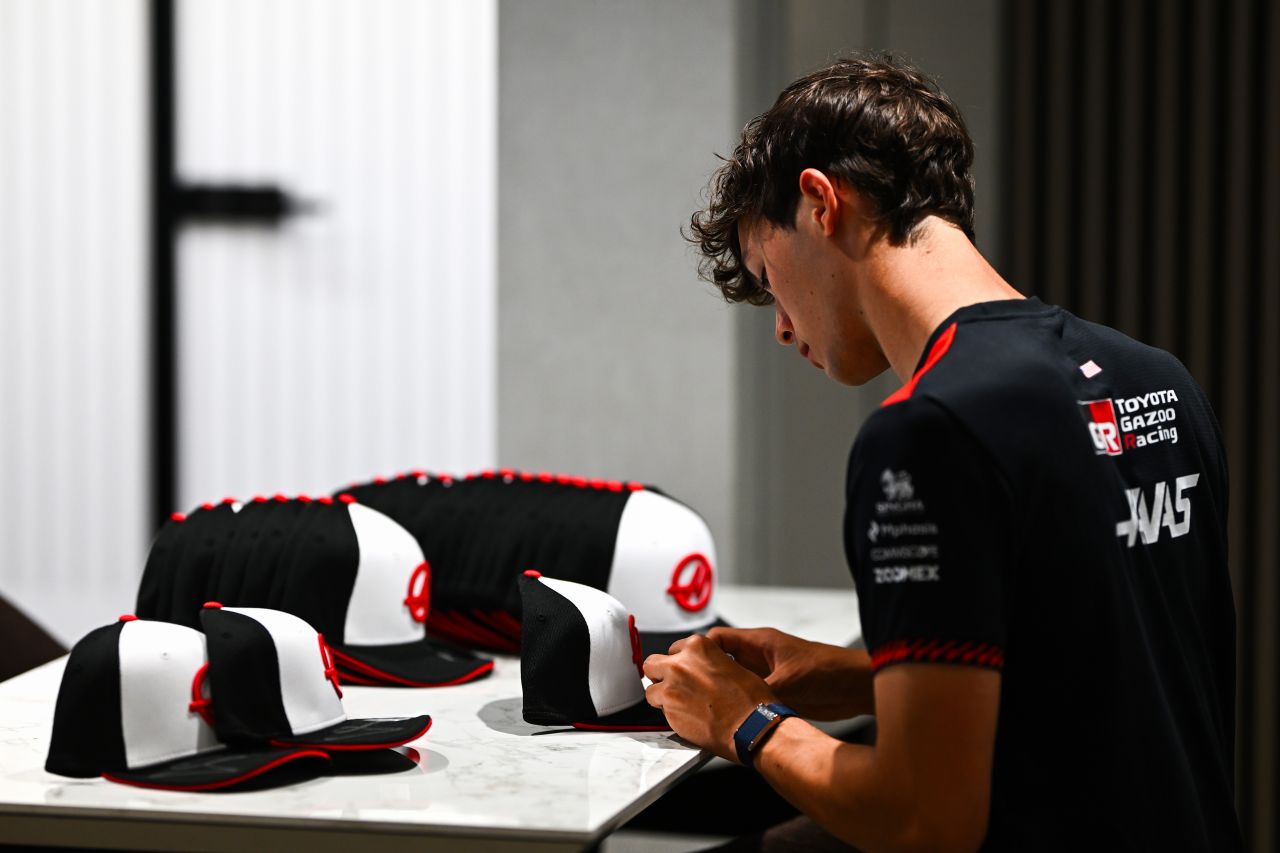
Oliver Bearman at Haas showed a similar inclination, splitting his time between a MoonSwatch (the Uranus variant) and his ever-present Whoop fitness band.
Fernando Alonso presents the most high-profile case of a driver quietly resisting his team’s watch partnership. Despite Aston Martin’s relationships with Girard-Perregaux (through 2025) and now Breitling, Alonso is a personal Richard Mille ambassador and rarely wears anything else. Press conference photos and official team shoots occasionally show him in the team watch, but his default wrist is an RM.
Valtteri Bottas carved out a different niche entirely during his years between the top teams. Rather than wearing the mega-brands competing for grid space, Bottas collaborated with Finnish independent brand Sarpaneva on several pieces, including the Kilpisjurvi, a limited edition of 17 watches inspired by the Northern Lights and finished with Sarpaneva’s signature luminous treatment. For a more accessible option, Bottas and Sarpaneva also released a watch through the brand’s entry-level arm, S.U.F. Helsinki, called the Flying Finn.
Daniel Ricciardo no longer races in F1, but his personal collection surpasses everyone currently on the grid. The Australians’ Patek Philippe rotation includes a Grand Complications 5271P, a 5711 Ruby (one of the most sought-after Nautilus references ever produced), and an Aquanaut Travel Time 5164R. He also owns a 50th Anniversary “Jumbo” Royal Oak in yellow gold from Audemars Piguet. Ricciardo’s collection reflects someone who buys watches because he loves them, not because a contract requires it.
Why Luxury Brands Pay Billions to Be in Formula 1
The commercial logic behind F1’s appeal to luxury watch brands goes beyond simple logo exposure. Formula 1’s global audience skews wealthier, younger, and more internationally diverse than almost any other sport, making it a natural platform for brands selling products that start at several thousand dollars and can reach into the millions.
Under Liberty Media’s ownership, F1’s total revenue grew to $3.87 billion in 2025, a 14% increase year on year. Total sponsorship investment across all teams and the series itself is projected to surpass $3 billion in 2026, up from $2.5 billion the previous year. The Netflix series Drive to Survive, which debuted in 2018, played a significant role in expanding the sport’s audience in the United States and among younger demographics globally, creating exactly the kind of affluent, engaged viewer base that luxury brands target.
The LVMH deal is the clearest evidence of this commercial thesis. At a reported $150 million per year, the partnership involves TAG Heuer, Louis Vuitton (which provides the trophy cases for podium ceremonies) and Moet Hennessy (which supplies champagne for celebrations). The breadth of LVMH brands involved reflects a calculation that F1 is not just a watch marketing platform but a lifestyle showcase for the entire luxury sector.
For smaller independent brands like H. Moser & Cie., the F1 platform offers something different: mainstream visibility that would be nearly impossible to achieve through traditional advertising. Before Alpine, Moser was known primarily to serious collectors. The F1 partnership and the Gasly collaboration put the brand in front of millions of viewers who might never have encountered it otherwise.
Richard Mille’s dual presence at Ferrari and McLaren represents the most ambitious watch brand strategy on the grid. The brand’s average retail price exceeds $200,000, and its F1 involvement reinforces the same message it communicates through partnerships in tennis (Rafael Nadal), golf, and sailing: that Richard Mille produces the most technologically advanced, lightweight, shock-resistant watches available, tested in the most demanding conditions imaginable.
The 2026 season, with its new regulations, new teams, and an expanded calendar, will push the commercial value of these partnerships even higher. For the watch industry, Formula 1 has become the single most valuable marketing platform in luxury goods.
Want more F1Chronicle.com coverage? Add us as a preferred source on Google to your favourites list for the best F1 news and analysis on the internet.
For more F1 news and videos, follow us on Microsoft Start.
New to Formula 1? Check out our Glossary of F1 Terms, and our Beginners Guide to Formula 1 to fast-track your F1 knowledge.
More F1 Reading
- How F1 Fans Can Join The Spirit Of Competition From Home
- Apple Secures Exclusive Formula 1 Rights As Services Revenue Hits Record High
- Derek Warwick Suspended From Canadian GP Stewarding Duties
- F1’s Biggest Movers and Shakers After Barcelona Test

Comments
More in News

Max Verstappen Says First Red Bull Engine Win Was Incredible After Hectic Bahrain Grand Prix Victory

George Russell Admits His 2026 Title Hopes Are Now Exceptionally Unlikely After Cruel Bahrain GP Retirement

Lewis Hamilton Reveals the Tyre Debate That Sank His Heart Before Remarkable Bahrain GP Recovery to Podium

Max Verstappen Claims First Win Of 2026 At Chaotic Bahrain Grand Prix
