How Fast Are F1 Cars In 2026?
- 2026 F1 cars have hit 315 km/h (196 mph) in speed traps at the Australian Grand Prix, with realistic potential for 350+ km/h on low-downforce circuits later in the season.
- Lap times are roughly 3.4 seconds slower than 2025 due to 30 percent less downforce, but the new active aerodynamics system makes cars significantly faster on straights.
- The upgraded power unit now exceeds 1,000 bhp with a 50/50 split between electric and combustion power, tripling the electrical output of the previous generation.
2026 F1 Top Speeds and Lap Times From the Opening Races
F1 cars in 2026 are reaching top speeds above 315 km/h (196 mph) on straights thanks to the new active aerodynamics system, while lap times sit roughly three seconds slower than their 2025 predecessors due to reduced high-speed cornering grip. The 2026 regulation overhaul is the most dramatic technical reset Formula 1 has seen in decades, fundamentally changing how fast F1 cars are in 2026 compared to any previous era of the sport.
The opening races of the 2026 season at Albert Park in Melbourne and Shanghai International Circuit gave us our first real-world data on what these new-generation machines can do. The numbers tell a fascinating story: cars that are quicker in a straight line but significantly slower through fast corners, producing a completely different performance profile to the ground-effect machines they replaced.
2026 F1 Technical Regulations: What Changed?
The 2026 cars represent a ground-up redesign driven by three goals: closer racing, improved sustainability, and a greater role for electric power. Every major system on the car has been reworked, and the differences between the 2025 and 2026 rule sets are significant across every measurable dimension.
The most visible change is active aerodynamics. The front and rear wings can now adjust their angle of attack between two modes while the car is on track. In low-drag configuration (called X-mode), the wings flatten out to minimise air resistance on straights. In high-downforce configuration (Z-mode), they pitch to a steeper angle to generate grip through corners. This system replaces DRS, which has been removed entirely.
Under the bodywork, the power unit has been transformed. The 1.6-litre V6 turbo-hybrid engine remains, but the electric component has been massively upgraded. The MGU-K now produces 350 kW, tripled from the previous 120 kW, creating a roughly 50/50 split between electrical and internal combustion power. Total output exceeds 1,000 bhp. The MGU-H has been deleted, simplifying the power unit and lowering the barrier to entry for new manufacturers like Audi and Ford.
The cars themselves are physically smaller and lighter than the 2022-2025 generation. The minimum weight drops to 768 kg, a reduction of 30 kg. The wheelbase is shorter by 200 mm, the overall width is reduced by 100 mm, and the floor is 150 mm narrower. All cars must run on 100% sustainable fuel with no new fossil carbon in its composition.
How Fast Are F1 Cars in 2026 on the Straights?
Straight-line speed is where the 2026 cars genuinely shine. The combination of active aero in X-mode and over 1,000 bhp means these machines are pulling higher top speeds than their predecessors on many circuits.
At the 2026 Australian Grand Prix, speed trap data showed rookie Arvid Lindblad topping the charts at 315 km/h, with Nico Hulkenberg reaching 311.5 km/h and Lewis Hamilton recording 309.6 km/h. Notably, the frontrunners were more conservative in qualifying trim, with pole-sitter George Russell registering 297.9 km/h through the speed trap. This reflects the new challenge of energy management under the upgraded energy recovery system, where teams must balance outright pace with battery deployment across an entire lap.
Mercedes team principal Toto Wolff made headlines before the season by suggesting that 400 km/h could be theoretically achievable under the new regulations. He later clarified that deploying all available electric energy on a single straight could push a car to that figure, though it would leave nothing in the battery for the rest of the lap. FIA single-seater director Nikolas Tombazis was quick to push back, stating that 400 km/h speeds would not materialise in practice. Realistic estimates suggest top speeds of around 350 to 360 km/h on low-downforce circuits like Monza as teams optimise the active aero package.
Telemetry comparisons between 2025 and 2026 machinery show the new cars consistently pulling ahead on every straight section of a lap. The advantage builds progressively as the car accelerates, with the active aero and electrical power working together to extend the speed differential.
Cornering Speed and Lap Time Comparison
While the straights tell a positive story, the corners reveal the trade-off at the heart of the 2026 regulations. Reduced floor area, narrower dimensions, and the simplified ground-effect tunnels mean the 2026 cars produce approximately 30 percent less downforce than their predecessors and 55 percent less drag.
At Melbourne, George Russell took pole position with a 1:18.518. For context, Lando Norris set the 2025 pole at Albert Park with a 1:15.096, making the 2026 car approximately 3.4 seconds slower around the same circuit. That is a significant gap by F1 standards, roughly equivalent to the difference between a front-running car and a backmarker in a typical season.
Fernando Alonso, one of the most experienced drivers on the grid, described the sensation in the cockpit as dramatically different. He noted the cars feel around 50 km/h slower through high-speed corners compared to the previous generation. Drivers have had to completely recalibrate their braking points and turn-in references for fast sweeping sections of track.
The Chinese Grand Prix in Shanghai reinforced these patterns. Kimi Antonelli claimed pole with a 1:32.064 and went on to win the race with a fastest lap of 1:35.275, becoming the youngest driver ever to achieve a hat trick of pole, win, and fastest lap in a single Grand Prix. It was the first time an Italian driver had accomplished that feat since Alberto Ascari in 1953. The Shanghai International Circuit, with its mix of high-speed sweeps and heavy braking zones, highlighted how the 2026 cars excel in traction zones and under braking but lose time through quick direction changes.
Why Are 2026 F1 Cars Slower Per Lap but Faster on Straights?
The apparent contradiction of faster straights but slower laps comes down to where time is gained and lost on a racing circuit. A lap time is the sum of every acceleration, braking, and cornering phase. In 2026, the cars gain time on straights through active aero and increased electrical power, but they lose significantly more time through the corners due to reduced aerodynamic downforce.
The previous generation of ground-effect cars (2022-2025) generated enormous downforce through sculpted underfloor tunnels. Those tunnels have been simplified and reduced for 2026, cutting peak downforce levels. The active aero system partially compensates in Z-mode, but it cannot fully replicate the cornering grip that dedicated ground-effect floors produced.
This trade-off was deliberate. The FIA designed the 2026 regulations to create cars that are easier to follow through corners and that produce more overtaking opportunities on straights. By reducing the aerodynamic “dirty air” effect behind a car and giving drivers a powerful low-drag mode, the regulations aim to generate more wheel-to-wheel battles than the previous era.
Early evidence from Melbourne and Shanghai suggests this is working. Russell and Antonelli both reported that following another car through corners is noticeably easier than in 2025, while the X-mode on straights creates genuine speed differentials for attacking and defending.
How the 2026 Power Unit Affects Top Speed
The 2026 power unit is a fundamentally different machine to its predecessor. While both use a 1.6-litre V6 turbo, the balance of power has shifted dramatically towards electrical energy.
The MGU-K, which converts braking energy into electrical power, now produces 350 kW compared to the previous 120 kW. This near-tripling of electric output means the battery and motor play a far larger role in straight-line performance. Drivers deploy electrical energy strategically, and the boost is most impactful during acceleration out of slow corners and on long straights.
The removal of the MGU-H simplifies the overall architecture. However, it also means the turbo no longer has electrical anti-lag assistance, which changes the power delivery character. Drivers have noted more perceptible turbo lag compared to the ultra-smooth delivery of the 2022-2025 units.
Total combined output exceeds 1,000 bhp for the first time in the hybrid era, putting these power units comfortably among the most powerful engines F1 has ever used. The 100% sustainable fuel requirement does slightly reduce the energy density compared to conventional racing fuel, but the net performance impact is minimal given the electrical power gains. The race fuel allowance has also dropped from 110 kg to 70 kg, reflecting the greater reliance on electric energy harvesting.
Active Aerodynamics: X-Mode vs Z-Mode Explained
Active aerodynamics is the defining technology of the 2026 cars and the single biggest factor in their straight-line speed. The system works through adjustable elements on both the front and rear wings.
X-mode is the low-drag setting. When activated, the wing elements rotate to present a flatter profile to the oncoming air, dramatically reducing aerodynamic resistance. This is broadly similar in concept to the old DRS system but far more aggressive in execution, because both the front and rear wings adjust simultaneously and the angle change is larger. The result is a substantial reduction in drag that allows the car to reach higher terminal velocities.
Z-mode is the high-downforce setting. The wing elements pitch to a steeper angle, increasing the aerodynamic load on the car and improving grip through corners. This mode engages automatically based on speed and braking inputs, so drivers do not need to manually switch between modes in the same way they activated DRS.
The transition between modes happens in a fraction of a second. Onboard footage from the opening races shows the rear wing visibly moving as cars cross from cornering into braking zones and then onto straights. It is one of the most visually dramatic changes in modern F1, and the FIA’s aerodynamic flexibility tests have been completely redesigned to regulate how these moving elements behave.
Unlike DRS, which was only available within one second of a car ahead and in designated zones, the active aero system is available to any driver at predetermined points on the circuit. This fundamentally changes the tactical dynamic of attacking and defending positions, and early-season data suggests it is producing closer racing through more overtaking opportunities on straights.
Mercedes Dominance: What Early 2026 Speeds Tell Us
Mercedes locked out the front row and finished 1-2 at both the Australian and Chinese Grands Prix to start 2026. George Russell won in Melbourne, with Kimi Antonelli joining him on the podium. In Shanghai, the roles reversed as Antonelli took pole, the race win, and fastest lap. At 19 years and 202 days old, he became the youngest Grand Prix winner since Max Verstappen and the first Italian to win a race since Giancarlo Fisichella at the 2006 Malaysian Grand Prix.
The Mercedes W17 appears to have found a strong balance between X-mode straight-line speed and Z-mode cornering grip. Antonelli’s winning margin of 5.515 seconds in China suggests a significant pace advantage over the rest of the field in the early rounds. Lewis Hamilton finished third for Ferrari in Shanghai, claiming his first podium with his new team.
Max Verstappen’s Red Bull has shown flashes of competitiveness but has been hampered by reliability and setup issues. Verstappen crashed in qualifying at Melbourne, started 20th, and recovered to 6th, demonstrating strong race pace without the qualifying performance to match Mercedes.
It is still very early in the season, and the competitive picture will shift as teams bring upgrades and better understand the new regulations. But the initial data shows that getting the active aero integration right is the key differentiator in extracting maximum speed from the 2026 package.
Will 2026 F1 Cars Get Faster as the Season Progresses?
Almost certainly, yes. The opening races of any new regulation cycle always produce the slowest lap times of that era. Teams arrive at the first race with conservative setups and limited understanding of the car’s full potential. Over the course of a season, lap times typically drop by one to two seconds as development progresses.
Several factors will drive improvement in 2026. Teams will optimise the interaction between active aero modes and suspension settings to recover cornering grip. Power unit calibration will improve as engineers learn to extract more from the new 50/50 power split. And aerodynamic upgrades to floors, sidepods, and diffusers will incrementally increase downforce levels.
By the European leg of the calendar, expect to see pole times drop noticeably from the Melbourne and Shanghai benchmarks. The gap to 2025 lap times will narrow, though it is unlikely to close entirely during the first season. History suggests it typically takes two to three seasons for a new regulation set to match the outright pace of the generation it replaced.
Formula 1 Speed FAQs
What is the top speed of an F1 car in 2026?
Based on early-season data, 2026 F1 cars have been recorded at speeds above 315 km/h (196 mph) at the Australian Grand Prix. On power circuits like Monza, speeds could potentially reach 350 to 360 km/h or higher as teams optimise the active aero system throughout the season.
Are 2026 F1 cars faster than 2025?
On straights, yes. The 2026 cars reach higher top speeds thanks to active aerodynamics and over 1,000 bhp. However, overall lap times are approximately 3 to 3.5 seconds slower due to reduced cornering downforce.
What replaced DRS in 2026?
Active aerodynamics replaced DRS. The system uses adjustable front and rear wings that switch between X-mode (low drag) and Z-mode (high downforce). Unlike DRS, active aero is available to every car at predetermined points, not just those within one second of a rival.
How much horsepower does a 2026 F1 car have?
The 2026 power unit produces over 1,000 bhp combined from the 1.6-litre V6 turbo engine and the upgraded 350 kW MGU-K. Approximately half of the total power comes from the electric motor, a dramatic shift from the previous 80/20 split in favour of combustion.
How heavy is a 2026 F1 car?
The minimum weight for a 2026 F1 car is 768 kg including the driver, a 30 kg reduction from 2025. The cars are also physically smaller, with a shorter wheelbase, narrower body, and narrower floor.
Sources
Sky Sports: Australian GP qualifying report
Sky Sports: Chinese GP race report
ESPN: Russell claims stunning Melbourne pole
ESPN: Antonelli wins maiden race in Shanghai
Newsweek: FIA responds to Wolff’s 400 km/h claim

Comments
More in News

‘I’m not speaking before he’s leaving’, Verstappen ejects journalist from Japanese GP media session

‘Maintaining qualifying as a performance challenge’, FIA adjust qualifying rules for Japanese GP

Lewis Hamilton Net Worth and Salary: Ferrari Contract, Sponsors, and Business Empire
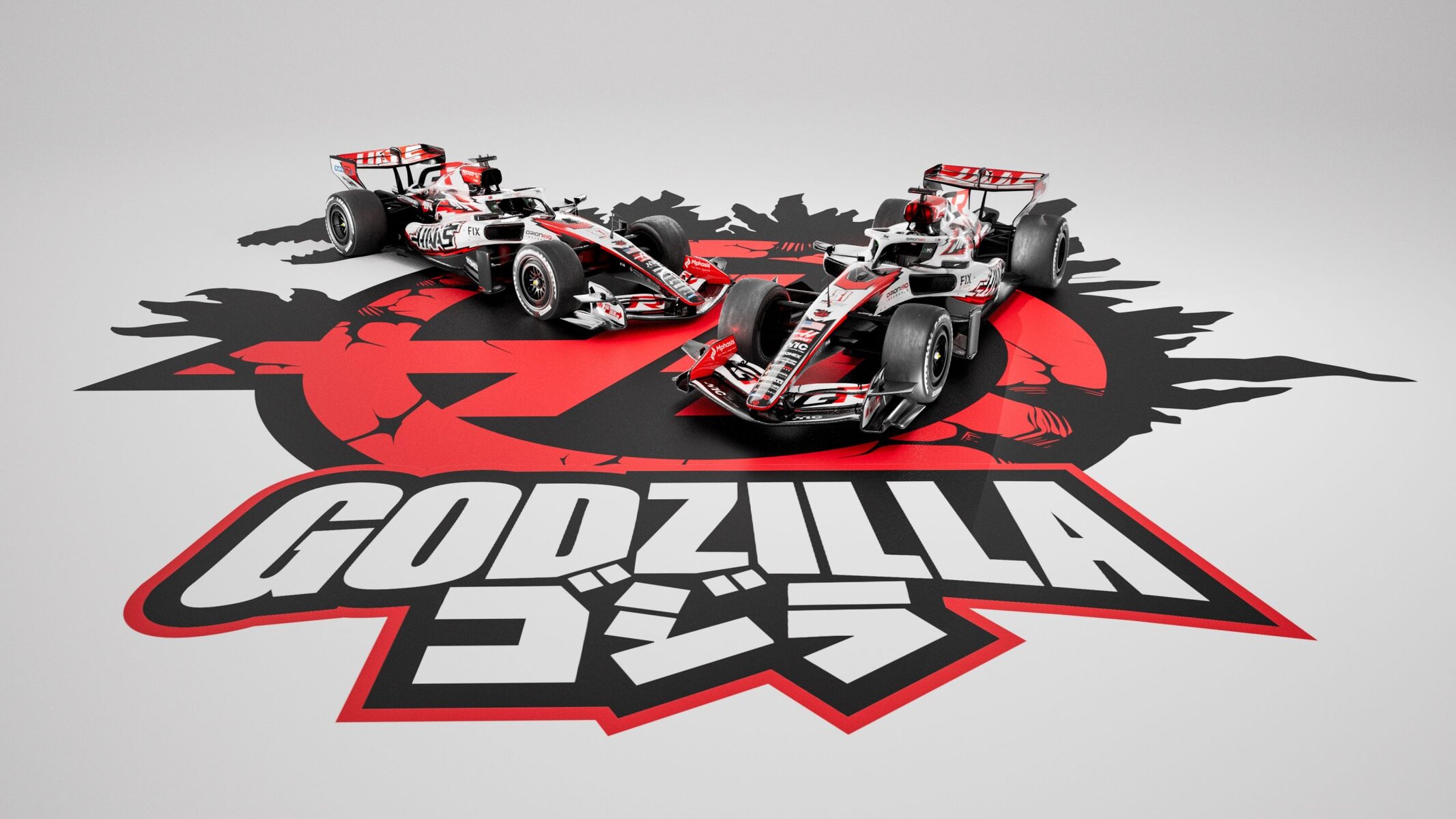
Godzilla themed Haas F1 Team car unveiled for the Japanese Grand Prix