The History of the Japanese Grand Prix: Every Winner and Record
Few races on the Formula 1 calendar carry the weight of the Japanese Grand Prix. Across 39 editions from 1976 to 2025, this event has produced 13 World Drivers’ Champions, more than any other venue. From Fuji Speedway in the rain-soaked 1970s to the figure-eight of Suzuka, the Japanese Grand Prix has been the stage for some of the sport’s most dramatic and consequential moments.
Origins at Fuji Speedway: 1976 and 1977
The Hunt and Lauda Title Showdown
Japan first appeared on the Formula 1 World Championship calendar in 1976, with the season finale held at Fuji Speedway in Shizuoka Prefecture. The race arrived with the Drivers’ Championship still undecided between James Hunt and Niki Lauda, separated by just three points heading into the final round.
Conditions on race day were appalling. Torrential rain left standing water across the track, and visibility was almost nonexistent. Lauda, still recovering from his near-fatal crash at the Nurburgring earlier that season, completed two laps before pulling into the pits and withdrawing. He later said the risk was not worth his life.
Hunt, meanwhile, pressed on through the downpour. He dropped to fifth at one point after a tire stop but recovered to finish third behind Mario Andretti and Patrick Depailler. Third place was enough for Hunt to claim the title by a single point, and Andretti’s victory for Lotus became the first official Japanese Grand Prix win in the Formula 1 record books.
The Brief Return in 1977
The following year brought James Hunt back to Fuji as the defending champion, and he delivered a commanding win. The 1977 event proved to be the last Japanese Grand Prix for a decade. A fatal accident involving a car leaving the track and striking spectators in 1977 led to the race being dropped from the calendar. Japan would not return until 1987, and when it did, the venue would be a very different circuit.
Suzuka Takes the Stage: 1987 to 1993
A Circuit Like No Other
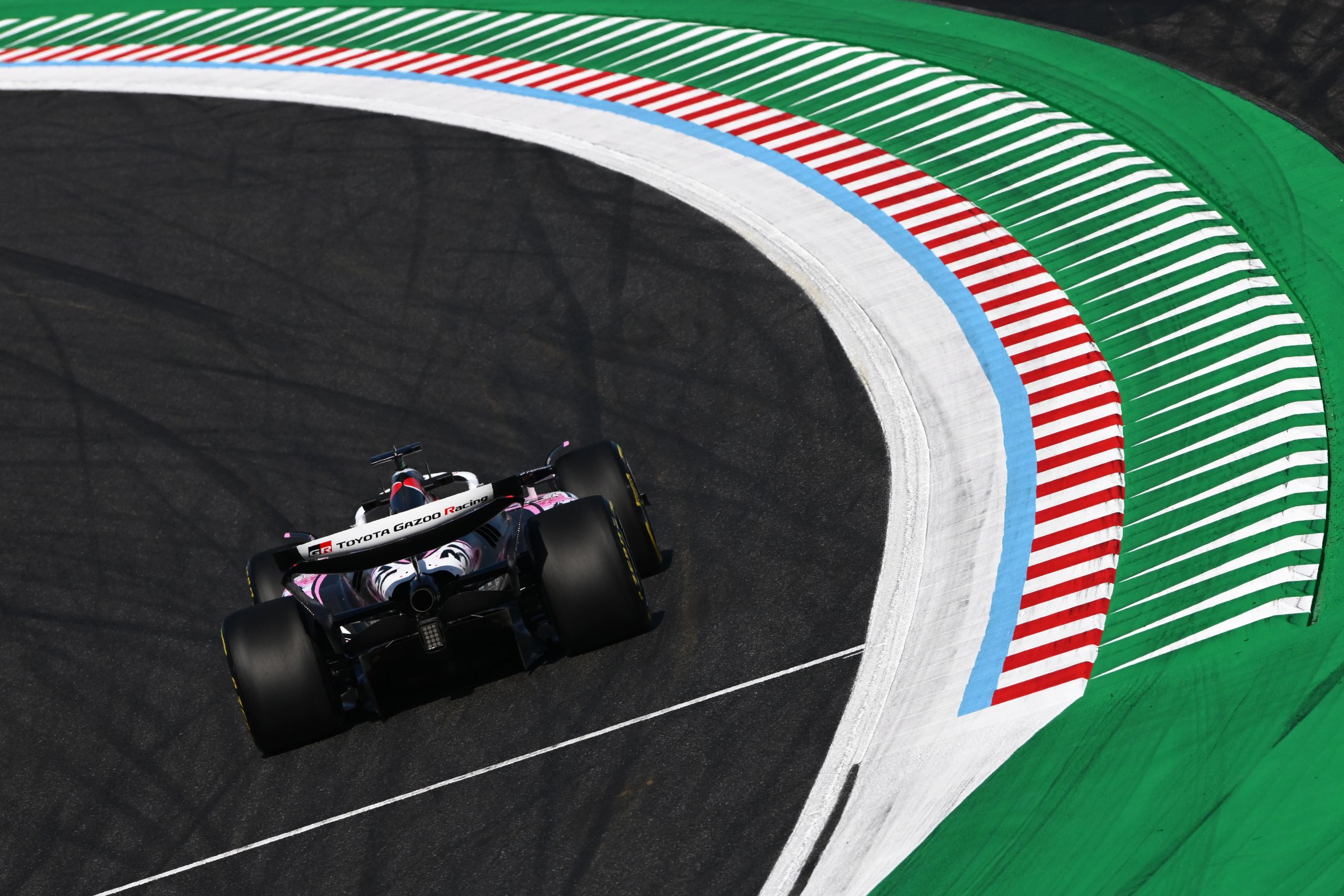
When the Japanese Grand Prix returned in 1987, it moved to the Suzuka International Racing Course in Mie Prefecture. The circuit had been designed by Dutch engineer John Hugenholtz and opened in 1962 as a test track for Honda. Its defining feature is the figure-eight layout, where the back straight passes over the front section via an overpass. It remains the only such design on the Formula 1 calendar.
Gerhard Berger won the inaugural Suzuka race for Ferrari, establishing the circuit as one of the most demanding on the schedule. The combination of high-speed esses, the 130R corner, and the tight hairpin at Turn 11 created a layout that rewarded driver skill above almost anything else.
The following year, Suzuka became the backdrop for one of Formula 1’s greatest rivalries. Ayrton Senna, who had qualified on pole, stalled at the start and dropped to 14th. He carved through the field and overtook teammate Alain Prost with just over ten laps remaining to win the race and secure his first World Championship.
Senna vs. Prost: Two Collisions, Two Championships
The 1989 Japanese Grand Prix remains one of the most debated races in the sport’s history. Senna and Prost, both at McLaren and both fighting for the title, arrived at Suzuka with Prost holding a points advantage. On lap 47, Senna attempted a pass at the chicane. Prost turned in, and the two cars interlocked. Prost retired on the spot. Senna was push-started by marshals, rejoined the circuit after bypassing the chicane, pitted for a new nose, and overtook Alessandro Nannini to cross the line first. Race officials disqualified Senna for missing the chicane, handing the win to Nannini and the championship to Prost.
One year later, with the roles reversed and Senna leading the standings, the two collided again at Suzuka. This time the contact came at Turn 1 on the opening lap. Both cars spun into the gravel and retired. The result clinched Senna’s second World Championship. Years later, Senna admitted the move was deliberate, describing it as a response to the events of 1989.
Senna returned to the top step at Suzuka in 1993, claiming an emotional victory in what would be his final season with McLaren. It was his third and last Japanese Grand Prix win.
The Schumacher Era: 1994 to 2006
Six Wins and a Disqualification
Michael Schumacher’s record at Suzuka stands above every other driver in the history of the event. Between 1995 and 2004, Schumacher won the Japanese Grand Prix six times, a total that remains unmatched.
His first Suzuka victory came in 1995 with Benetton, but it was his tenure at Ferrari that defined his association with the circuit. Schumacher won in 1997, a year that also produced controversy. At the title-deciding European Grand Prix at Jerez earlier that season, Schumacher had collided with Jacques Villeneuve while defending the championship lead and was later disqualified from the entire standings. His Suzuka win that year had come before the Jerez disqualification.
The 2000 Japanese Grand Prix gave Schumacher his first Drivers’ Championship for Ferrari, ending the team’s 21-year title drought. He won again in 2001, 2002, and 2004, turning Suzuka into something close to a personal stronghold.
Hakkinen’s Back-to-Back and Other Winners
Schumacher did not have the circuit entirely to himself. Mika Hakkinen won back-to-back races in 1998 and 1999 for McLaren, with the 1998 victory clinching his first championship. Damon Hill won twice, in 1994 and 1996, and Rubens Barrichello took his lone Suzuka victory in 2003 in the middle of Ferrari’s run of dominance.
Kimi Raikkonen won in 2005 for McLaren, and Fernando Alonso closed out the Suzuka chapter of this era with victory in 2006. The following year, the race moved to a familiar name.
Fuji’s Brief Return and Suzuka’s Revival: 2007 to 2013
Two Years at Fuji Speedway
The Japanese Grand Prix returned to Fuji Speedway for 2007 and 2008 under Toyota’s ownership of the venue. Lewis Hamilton won the rain-affected 2007 race in his rookie season, while Fernando Alonso took victory in 2008. Toyota withdrew its backing in 2009, citing the global economic downturn, and the race moved back to Suzuka permanently.
Vettel’s Suzuka Dominance
Sebastian Vettel became the next driver to leave a lasting mark on the Japanese Grand Prix. He won four of five races between 2009 and 2013 (2009, 2010, 2012, and 2013), with Jenson Button’s 2011 victory for McLaren the only interruption. Vettel’s 2011 race at Suzuka was still significant: he clinched his second consecutive World Championship that weekend, even without winning.
Vettel’s connection with Suzuka extended well beyond victories. By 2025, he shared the record for most race starts at the circuit with Michael Schumacher, both drivers having taken the grid at Suzuka 19 times. It was the kind of longevity milestone that reflected how central this race had become to a generation of champions.
The Mercedes Years and Verstappen’s Run: 2014 to 2025
Hamilton Adds Five to His Tally
Lewis Hamilton’s record at the Japanese Grand Prix stretches back to his rookie win at Fuji in 2007. After Suzuka reclaimed the race, Hamilton won four more times between 2014 and 2018, bringing his total to five victories. His 2014 win came in the middle of a season-long battle with Nico Rosberg at Mercedes, and Suzuka was the circuit where Hamilton began to pull clear in that fight.
Rosberg won the 2016 edition on his way to the championship, and Valtteri Bottas took the 2019 race for Mercedes. The team’s dominance at Suzuka in this era was emphatic: Mercedes won every Japanese Grand Prix from 2014 to 2019.
COVID Cancellations
The 2020 and 2021 Japanese Grands Prix were both cancelled as a result of pandemic-related travel restrictions in Japan. The two-year absence marked the longest gap in the race’s history, matched only by the decade without a Japanese Grand Prix between 1977 and 1987.
Verstappen’s Four Consecutive Wins
Max Verstappen has owned the Japanese Grand Prix from the moment racing resumed at Suzuka in 2022. His victory that year clinched his second World Championship, and he followed it with wins in 2023, 2024, and 2025. Four consecutive victories at Suzuka made Verstappen the first driver to achieve that streak at the circuit.
The 2025 race produced new benchmark times. Verstappen set a qualifying lap record of 1:26.983, the fastest lap ever recorded at Suzuka. In the race itself, Mercedes driver Kimi Antonelli posted a 1:30.965 to claim the fastest race lap, breaking Lewis Hamilton’s 2019 record of 1:30.983. Antonelli, at 18 years and 224 days old, became the youngest driver in Formula 1 history to record a race fastest lap.
Red Bull’s 2025 win also gave the team its eighth victory at Suzuka, making it the most successful constructor in the circuit’s history.
Every Japanese Grand Prix Winner
At Fuji Speedway:
- 1976: Mario Andretti (Lotus-Ford)
- 1977: James Hunt (McLaren-Ford)
- 2007: Lewis Hamilton (McLaren-Mercedes)
- 2008: Fernando Alonso (Renault)
At Suzuka International Racing Course:
- 1987: Gerhard Berger (Ferrari)
- 1988: Ayrton Senna (McLaren-Honda)
- 1989: Alessandro Nannini (Benetton-Ford)
- 1990: Nelson Piquet (Benetton-Ford)
- 1991: Gerhard Berger (McLaren-Honda)
- 1992: Riccardo Patrese (Williams-Renault)
- 1993: Ayrton Senna (McLaren-Ford)
- 1994: Damon Hill (Williams-Renault)
- 1995: Michael Schumacher (Benetton-Renault)
- 1996: Damon Hill (Williams-Renault)
- 1997: Michael Schumacher (Ferrari)
- 1998: Mika Hakkinen (McLaren-Mercedes)
- 1999: Mika Hakkinen (McLaren-Mercedes)
- 2000: Michael Schumacher (Ferrari)
- 2001: Michael Schumacher (Ferrari)
- 2002: Michael Schumacher (Ferrari)
- 2003: Rubens Barrichello (Ferrari)
- 2004: Michael Schumacher (Ferrari)
- 2005: Kimi Raikkonen (McLaren-Mercedes)
- 2006: Fernando Alonso (Renault)
- 2009: Sebastian Vettel (Red Bull-Renault)
- 2010: Sebastian Vettel (Red Bull-Renault)
- 2011: Jenson Button (McLaren-Mercedes)
- 2012: Sebastian Vettel (Red Bull-Renault)
- 2013: Sebastian Vettel (Red Bull-Renault)
- 2014: Lewis Hamilton (Mercedes)
- 2015: Lewis Hamilton (Mercedes)
- 2016: Nico Rosberg (Mercedes)
- 2017: Lewis Hamilton (Mercedes)
- 2018: Lewis Hamilton (Mercedes)
- 2019: Valtteri Bottas (Mercedes)
- 2022: Max Verstappen (Red Bull)
- 2023: Max Verstappen (Red Bull)
- 2024: Max Verstappen (Red Bull)
- 2025: Max Verstappen (Red Bull)
The 2020 and 2021 races were cancelled.
Records and Milestones
The Japanese Grand Prix has been held 39 times as a World Championship event across two circuits and five decades.
Most wins: Michael Schumacher leads with six victories (1995, 1997, 2000, 2001, 2002, 2004). Lewis Hamilton holds five wins (2007, 2014, 2015, 2017, 2018). Sebastian Vettel and Max Verstappen each have four.
Championship deciders: 13 World Drivers’ Championships have been settled at the Japanese Grand Prix, more than at any other event on the calendar. The list includes Hunt (1976), Senna (1988, 1990), Prost (1989), Schumacher (2000, 2003), Hakkinen (1998, 1999), Raikkonen (2007), Vettel (2011), and Verstappen (2022).
Qualifying lap record: 1:26.983, set by Max Verstappen in 2025.
Fastest race lap: 1:30.965, set by Kimi Antonelli in 2025.
Most starts: Michael Schumacher and Fernando Alonso share the record with 19 race starts at Suzuka.
Consecutive wins at Suzuka: Max Verstappen holds this record with four straight victories from 2022 to 2025.
Suzuka has hosted 35 of the 39 championship Japanese Grands Prix, with Fuji Speedway accounting for the remaining four (1976, 1977, 2007, 2008). The circuit’s figure-eight layout, its place in the Senna and Prost rivalry, and its record as the most prolific championship-deciding venue in Formula 1 history have cemented the Japanese Grand Prix as one of the most significant events in the sport.
Want more F1Chronicle.com coverage? Add us as a preferred source on Google to your favourites list for the best F1 news and analysis on the internet.
From F1 news to tech, history to opinions, F1 Chronicle has a free Substack. To deliver the stories you want straight to your inbox, click here.
For more F1 news and videos, follow us on Microsoft Start.
New to Formula 1? Check out our Glossary of F1 Terms, and our Beginners Guide to Formula 1 to fast-track your F1 knowledge.
Sources
- Japanese Grand Prix, Wikipedia
- Suzuka Circuit, Wikipedia
- Fuji Speedway, Wikipedia
- Completion of Suzuka Circuit 1962, Honda Global

Comments
More in News
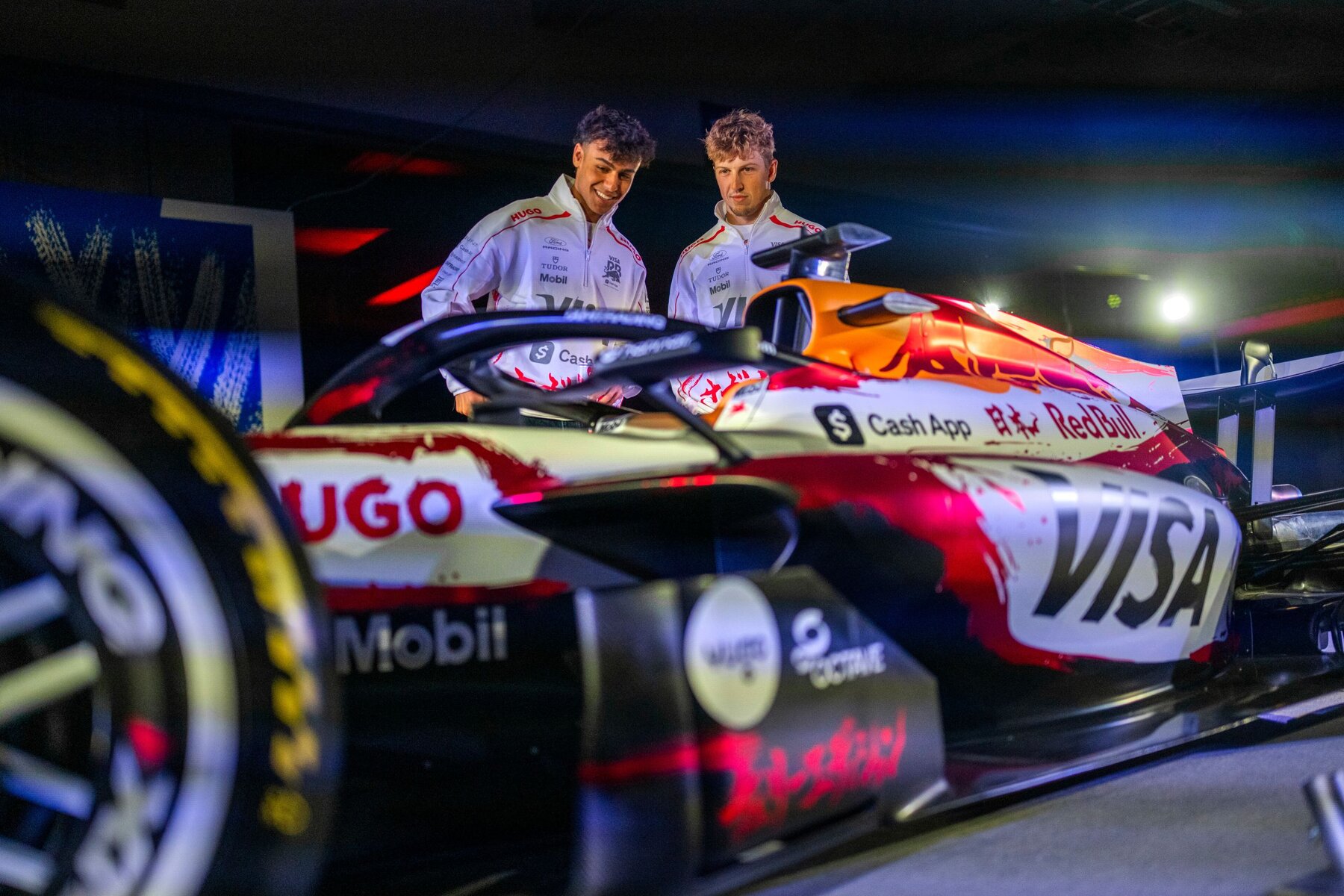
Celebrating Japanese car culture and cherry blossom; Racing Bulls unveil one-off livery
How to Attend the Japanese Grand Prix: Tickets, Travel and Best Seats

‘With immediate effect’, Wheatley’s Audi departure confirmed
Mercedes Team Announces Senior Leadership Change