A Beginner’s Guide to the Formula 1 Sprint Race
Six times a season, a Formula 1 race weekend runs a different schedule to the other eighteen or so events on the calendar. A second competitive race appears on Saturday, separate points are awarded, and the format that most fans grew up watching changes in ways that still confuse even regular viewers. This guide answers every common question about the sprint race, how it works, what it means for the championship, and why it exists.
What Is the Sprint Race in Formula 1?
The F1 sprint race is a short-format competitive race of approximately 100 kilometers, held on Saturday at selected grand prix weekends during the season. It is a standalone race with its own starting grid, its own points, and its own result that is recorded independently from the main grand prix. The sprint race is not a practice session, not a qualifying run, and not a warm-up: it is a fully competitive race in which drivers push for position from lights out to the checkered flag.
Sprint weekends were introduced to Formula 1 in 2021 and have evolved through several format iterations since. As of 2026, each sprint weekend features a dedicated Sprint Qualifying session that sets the sprint race grid, the sprint race itself, and a separate regular qualifying session that determines the Sunday grand prix starting order. The two qualifying sessions and the two races are entirely independent of each other in terms of grid positions and results.
What Is the Point of a Sprint Race in F1?
The point of a sprint race in F1 is to deliver more competitive on-track action across a race weekend, giving fans a second event with real championship consequences rather than a practice session or a qualifying run that only affects Sunday’s starting grid. The sprint race awards its own points, which count toward both the Drivers’ Championship and the Constructors’ Championship, meaning every position matters and drivers cannot afford to run conservatively.
From Formula 1 Management’s perspective, the sprint race also increases the commercial value of selected weekends by giving broadcasters more live competitive content to air. A traditional grand prix weekend produces one race. A sprint weekend produces two. For circuits and promoters in high-profile markets, the additional competitive session is a significant draw, which is part of why the six sprint venues each season are chosen with broadcast audience and commercial interest in mind.
Why Was Sprint Added to F1?
Sprint races were added to Formula 1 from the 2021 season following a push from both Formula 1 Management and the FIA to make race weekends more consistently exciting for fans across the full three days. The traditional weekend format, with practice sessions on Friday and Saturday morning leading to qualifying on Saturday afternoon, meant that competitive action was confined largely to Saturday afternoon and Sunday. Practice sessions attracted declining audience interest, and the format had not changed in decades.
The introduction of the sprint was also driven by a desire to test whether shorter format racing would attract new audiences to the sport, particularly younger fans more accustomed to the condensed entertainment of other sporting formats. The format has been revised several times since 2021, with the most significant change in 2023 introducing Sprint Qualifying as a separate session to set the sprint grid, removing the dependency on regular qualifying that had been a weakness of the original format.
How the Sprint Weekend Works
A sprint weekend follows a five-session structure spread across Friday and Saturday, with the grand prix taking place on Sunday as normal. The schedule differs meaningfully from a conventional weekend and can be confusing to follow if you are watching for the first time.
On Friday, there is a single free practice session in which drivers can run any setup they choose. This is the only free practice session on a sprint weekend, compared to the two sessions on a standard weekend. Friday afternoon brings Sprint Qualifying, a three-part elimination session structured similarly to regular qualifying with SQ1, SQ2, and SQ3 segments. Sprint Qualifying determines the grid for Saturday’s sprint race and has no bearing on Sunday’s grand prix grid.
On Saturday morning, the sprint race takes place over its full distance of approximately 100 kilometers. Saturday afternoon then brings regular qualifying, structured in the standard Q1, Q2, Q3 format, which sets the grid for Sunday’s grand prix. Sunday’s race runs as normal regardless of what happened in the sprint.
Is Sprint the Same as Qualifying in F1?
No, the sprint race is not the same as qualifying in F1. Sprint weekends use two completely separate qualifying sessions: Sprint Qualifying sets the grid for the Saturday sprint race, and regular qualifying sets the grid for the Sunday grand prix. The two qualifying sessions use the same three-part elimination format but their results are entirely independent. A driver who qualifies on pole for the sprint race does not automatically start from pole on Sunday, and vice versa.
This separation was a deliberate change from the original 2021 sprint format, where regular qualifying on Friday directly set the sprint grid, meaning a poor qualifying lap had consequences for both sessions. The current structure gives drivers and teams a clean slate for each event, which is considered fairer and produces a better competitive product for both the sprint and the grand prix qualifying sessions.
What Happens After a Sprint Race in F1?
After the sprint race concludes, the finishing order is confirmed, points are awarded to the top eight finishers, and a sprint trophy presentation takes place for the top three. Regular qualifying then begins on Saturday afternoon, setting the starting grid for the Sunday grand prix. The sprint race result has no direct bearing on where drivers start on Sunday: a driver who wins the sprint does not receive any grid advantage for the main race and starts wherever their regular qualifying lap placed them.
Between the sprint race and regular qualifying, teams are permitted to make setup changes to the car. This is different from a standard race weekend where parc fermé rules restrict what teams can modify to the car from the end of qualifying through to the end of the race. On a sprint weekend, teams have a working window after the sprint to change setups, tyres, and components before putting the car into parc fermé following regular qualifying. This window is one of the more technically consequential parts of the sprint weekend format for teams trying to optimize both events.
Sprint Race Rules and Format
How Many Sprints Do They Do in F1?
Formula 1 runs six sprint race weekends per season in 2026. These six events are distributed across the calendar and confirmed before the season begins. The remaining events on the calendar, typically around 18 or 19 races, follow the conventional three-day format with two practice sessions, qualifying, and the grand prix.
The number of sprint weekends has increased since the format was introduced. The original 2021 season featured three sprint events as a trial. That number increased to six by the time the format stabilized in its current structure. Six sprint weekends represent a meaningful fraction of the season and enough events to generate significant championship points through the sprint format across a full year.
The six sprint race weekends in 2026 are China at Shanghai in March, the United States at Miami in May, Canada at Montreal in May, Great Britain at Silverstone in July, the Netherlands at Zandvoort in August, and Singapore in October. The selection spans four different continents and covers a range of circuit characteristics, from the high-speed flowing layout of Silverstone to the tight street sections of Singapore and the purpose-built complexity of Zandvoort.
How Are Sprint Races Chosen in F1?
Sprint race circuits are selected by Formula 1 Management in agreement with the FIA before each season. There is no fixed set of circuits that permanently host sprint weekends, and the selection changes from year to year. Circuits are chosen based on a combination of factors: broadcast market size and audience interest, circuit characteristics that suit short-format racing with overtaking opportunities, commercial agreements with event promoters, and geographic distribution across the calendar.
Circuits that have hosted sprint weekends in recent seasons include Bahrain, Imola, Azerbaijan, Austria, Circuit of the Americas, Interlagos, Qatar, Miami, Shanghai, and others. Some of these circuits have hosted sprints multiple times; others have rotated in and out of the sprint schedule depending on the season’s priorities. The sprint venues for each year are published with the calendar release before the season begins.
Are F1 Sprint Cars Different?
No, the cars used in the sprint race are identical to those used in the main grand prix. There are no sprint-specific components, no modifications to the power unit, no changes to the aerodynamics, and no differences to the electronics or energy management system between the sprint and the Sunday race. The same car that competes in the sprint race on Saturday competes in the grand prix on Sunday, subject only to the setup changes teams may make in the window between the sprint and regular qualifying.
In 2026, this means the active aerodynamic system with its X-mode and Z-mode wing configurations operates in exactly the same way during the sprint as it does in the grand prix. The same 350kW MGU-K output limit applies, the same energy recovery rules govern how much the car can harvest and deploy per lap, and the same proximity-based overtake override system is available to drivers. The sprint race in 2026 is a full demonstration of the complete 2026 technical package in a compressed race format.
Does an F1 Sprint Race Count as a Win?
A sprint race victory is recorded separately from a grand prix win in Formula 1’s official statistics. It does not count toward a driver’s grand prix win tally, which only records Sunday race victories. Sprint wins are tracked as a distinct category in Formula 1’s official records and recognized with a separate sprint winner trophy, but they hold a different status to a grand prix victory in terms of historical recognition and career statistics.
This distinction matters for the historical record. When journalists and analysts refer to a driver’s win count, the figure cited almost always refers exclusively to grand prix victories. A driver who wins six sprint races during a season and zero grand prix races would be described as having zero wins for that season in the traditional sense. The sprint win is recognized and recorded, but it does not carry the same weight in the sport’s competitive narrative as a full race victory. This was a deliberate decision by Formula 1 to preserve the primacy of the grand prix as the defining competitive event of the weekend.
Do Sprint Races Have a Podium?
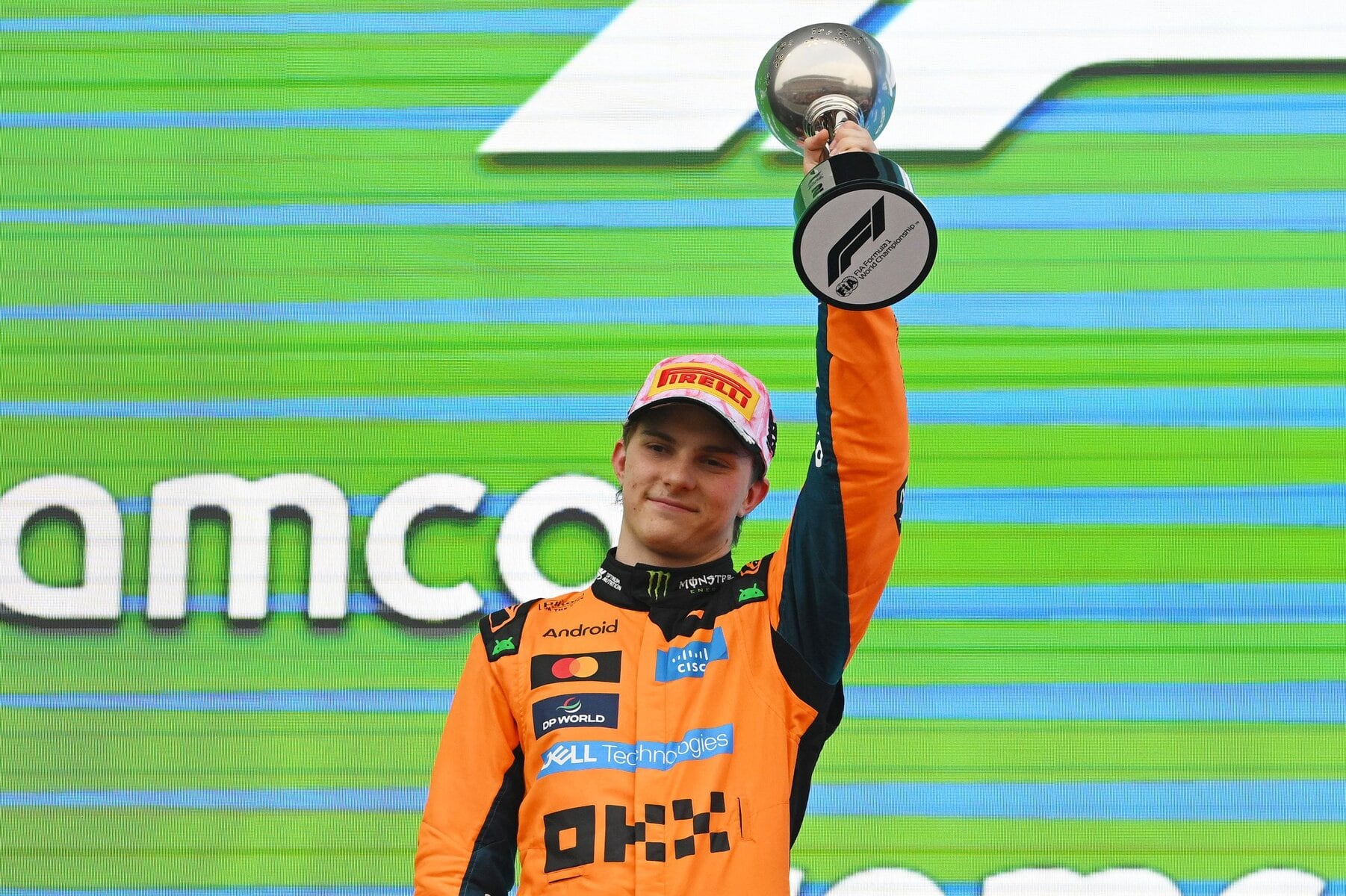
Yes, sprint races have a trophy presentation for the top three finishers, but it is a smaller and less formal ceremony than the main grand prix podium. There is no national anthem, no full podium stage with the grand prix trophy, and no champagne spray in the traditional sense. The sprint trophy presentation is typically a brief ceremony held in the pit lane or a designated area at the circuit, acknowledging the top three finishers with sprint-specific trophies.
The distinction between the sprint trophy presentation and the grand prix podium ceremony reflects the format’s positioning as a competitive but secondary event within the weekend. The full podium ceremony, with its anthem, its significance for the Constructors’ Championship points table, and its place in the racing tradition, remains reserved for the Sunday race winner. The sprint presentation is a recognition of the result without the full ceremonial weight of a grand prix victory.
Sprint Race Points: How the System Works
Sprint races award championship points to the top eight finishers. The points available are lower than those available in the grand prix, reflecting the shorter distance and lesser status of the sprint relative to the main race. Points are awarded as follows: eight points for first place, seven for second, six for third, five for fourth, four for fifth, three for sixth, two for seventh, and one point for eighth place. No points are awarded from ninth place downward.
For comparison, the grand prix awards 25 points for the win and a point available for the fastest lap. The maximum a driver can score in a sprint race is eight points, compared to 26 in the grand prix including the fastest lap bonus. Across six sprint weekends in a season, a driver who wins every sprint collects 48 points from sprint races, which represents a meaningful but not decisive fraction of the championship points available from grand prix victories alone. In a close championship, however, sprint results can be the difference between winning and losing the title.
Points from sprint races count equally in both the Drivers’ Championship and the Constructors’ Championship standings. A sprint race point earned at the first event of the season is worth exactly the same as a sprint race point earned at the last, and both count alongside grand prix points in the final championship tally.
Sprint Race Strategy: Tyres and Energy
Teams are not required to make a pit stop during a sprint race. Unlike the grand prix, where a mandatory tyre compound change is built into the race rules, the sprint race can be completed entirely on one set of tyres. Teams select their starting tyre and in most cases run the full distance without stopping, since a sprint race covers roughly one third of the grand prix distance and tyre degradation rarely reaches the point where a stop is strategically beneficial within that window.
In 2026, energy management in the sprint follows the same per-lap rules as the grand prix. The 4MJ delta state of charge cap and the 9MJ harvest ceiling apply lap by lap regardless of whether the race is a sprint or a full grand prix. The difference is simply that a sprint race involves fewer laps, so the cumulative energy budget picture changes faster. Teams that enter the sprint with a well-planned energy strategy can deploy the MGU-K’s full 350kW output more consistently than those who have not prepared the energy management approach for the compressed format.
Sprint Races in the 2026 Era
The 2026 Technical Regulations introduce the most significant technical changes in Formula 1’s modern history, and the sprint race is where those changes will be visible in a concentrated format. The active aerodynamic system, with its X-mode and Z-mode wing transitions triggered by lift-off and braking, creates a different visual language to anything seen in previous sprint races. Drivers managing the interaction between energy harvesting and wing configuration in a 100-kilometer race that offers no recovery time for a strategic error will demonstrate the full complexity of the 2026 technical package in compressed form.
The proximity-based overtake override, which gives a following driver full MGU-K output when within one second of the car ahead in a designated zone, replaces DRS as the primary overtaking tool in sprint races as in the grand prix. The six sprint weekends each season will serve as some of the most instructive early data points for understanding which teams have mastered the energy management and active aero interaction that defines the 2026 competitive hierarchy. For readers who want to understand the technical systems these cars are running, the 2026 aerodynamics guide and the 2026 power unit guide cover the active aero and energy systems in full detail.
Want more F1Chronicle.com coverage? Add us as a preferred source on Google to your favourites list for the best F1 news and analysis on the internet.
From F1 news to tech, history to opinions, F1 Chronicle has a free Substack. To deliver the stories you want straight to your inbox, click here.
For more F1 news and videos, follow us on Microsoft Start.
New to Formula 1? Check out our Glossary of F1 Terms, and our Beginners Guide to Formula 1 to fast-track your F1 knowledge.

Comments
More in News

Mario Kart in Real Life: Why the 2026 Japanese GP Crash is F1’s Ultimate Warning Sign
‘It’s just not what I want to do’, Max Verstappen admits there is a lot for him to figure out as F1 future decision looms
FIA acknowledge “high closing speeds” contributed to Bearman Japan shunt, but what’s going to change?
Kimi Antonelli: ‘It’s too early to think about the championship’