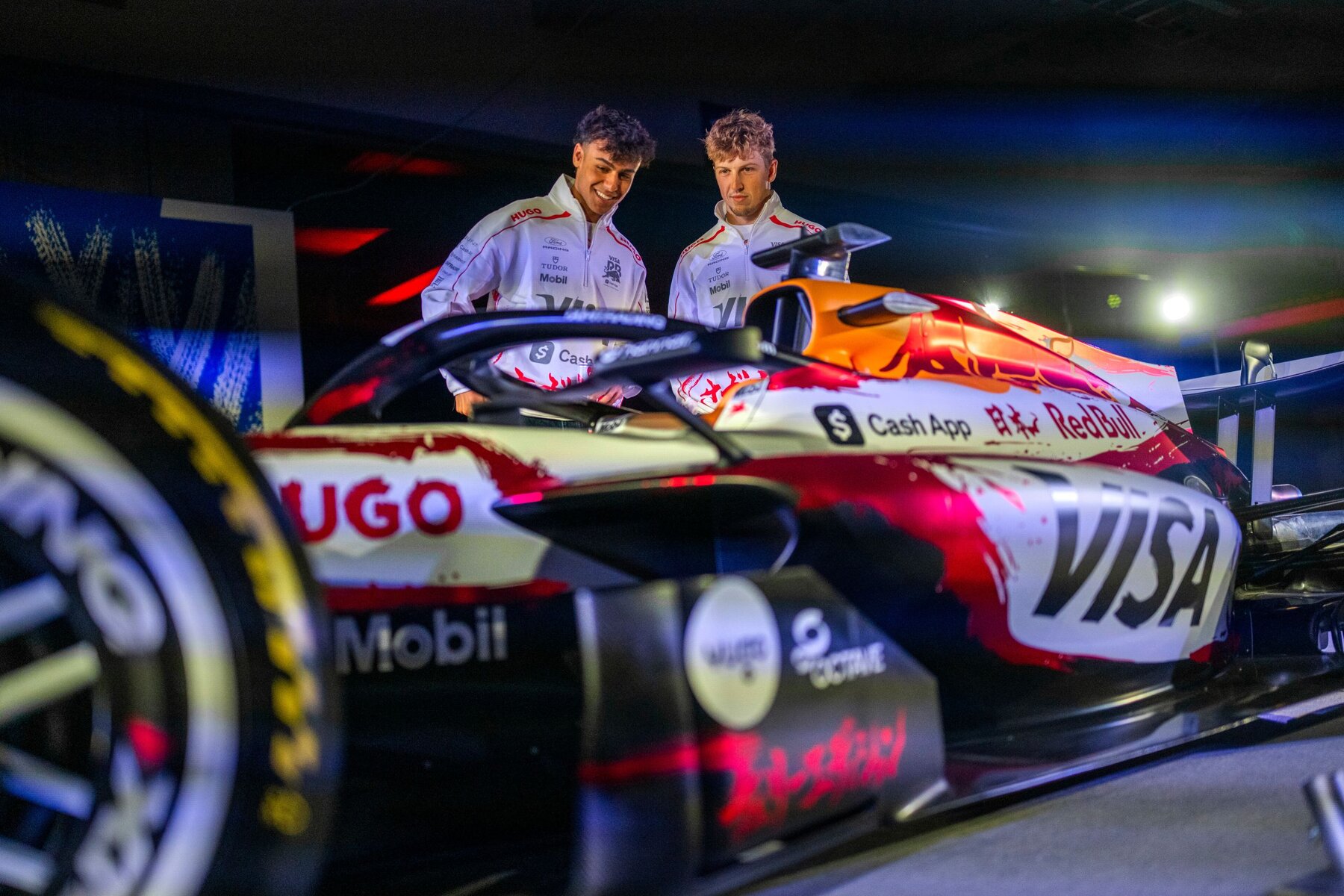
The 2026 Formula One season is upon us, bringing with it an all-new technical regulations package highlighted by nimbler cars and a completely overhauled power-unit concept. The Australian Grand Prix will be the first opportunity to see this new era of cars race in anger.
Having hosted the opening grand prix 22 times since shifting to Melbourne from Adelaide in 1996, the Australian Grand Prix always brings the excitement of seeing the new cars race for the first time.
While there are many questions about how aspects such as energy management and race starts will pan out, given the absence of the complex MGU-H in the new power-unit, here is a look back to debut races for new sets of regulations as far back as 2009.
2009 – The Brawn fairytale begins
Skinnier, taller wings, a return to slick tyres and the introduction of KERS (kinetic energy recovery system) – 2009 was a major shake-up for the sport and brought some new faces to the fore.
Ferrari, McLaren and Renault, who had all won championships throughout that decade, were caught out by Brawn GP’s innovative double-diffuser concept.
Borne out of the remains of Honda, who pulled the plug on their F1 programme ahead of the season, Ross Brawn pulled off a masterstroke by installing a Mercedes-Benz engine into the car originally destined to be a Honda. It went on to smoke the competition on debut.
The eventual 2009 world champion Jenson Button led a Brawn one-two in the race ahead of team-mate Rubens Barrichello. The podium was completed by Jarno Trulli’s Toyota, which was also running the double-diffuser and had started the race from the pit lane.

2014 – Dawn of the hybrid era
Gone were the screams of the naturally aspirated V8 as F1 shifted into its hybrid era with the introduction of the 1.6-litre turbocharged V6, boasting two types of motor generator units.
It is fascinating to see the discussions around the unknowns of the 2026 power-units, given that back in 2014 there were similar concerns, especially around reliability and whether even half the cars would finish.
Thankfully, 13 of the 22 competitors were classified as finishers. Polesitter Lewis Hamilton suffered a power-unit-related failure on Lap 2, with reigning world champion Sebastian Vettel also retiring on the following lap.
What was not in doubt, however, was the dominance of Mercedes, née Brawn GP. Despite Hamilton’s DNF, his team-mate Nico Rosberg took a commanding 26-second victory to begin the Silver Arrows’ extended run of eight consecutive constructors’ championships.
2017 – Aggressive aero births lap-time-eating monsters
While 2017 featured many changes off track, including the takeover of F1’s commercial rights by Liberty Media from Bernie Ecclestone and CVC, the aggressive aero regulations also represented a significant shift aimed at bringing excitement back to the sport.
Although the lap-time-eating monsters did little to improve raceability, they brought renewed hope for Ferrari and Red Bull, who had been unable to challenge the Mercedes juggernaut that had won every championship since 2014.
Vettel took his first win since 2015 at the Australian Grand Prix, springboarding the four-time world champion into a title fight with the then three-time champion Hamilton. Following the season opener, the German led the standings for the first half of the campaign.
However, Vettel’s title challenge unravelled after the Singapore Grand Prix, opening the path for Hamilton to claim his fourth championship with two races in hand.

2022 – Ground effect and the return to Melbourne
While Melbourne did not host the opening race of the 2022 season, F1’s return to Australia for the first time since the cancelled 2020 event was celebrated with the arrival of the all-new ground-effect era car.
Increased raceability was at the core of the regulation overhaul, with cars initially able to retain up to 86 per cent of their downforce when following another car, compared to the reported 55 per cent available under the previous rules.
Charles Leclerc took the season opener in Bahrain for Ferrari, with reigning world champion Max Verstappen responding on the streets of Jeddah in Round 2, before the Monegasque claimed his second win in three races in Australia.
What also made this Australian Grand Prix special was the debut of the redesigned Albert Park circuit, with reprofiled corners allowing faster, more flowing sections designed to encourage better racing and more overtaking opportunities.

Want more F1Chronicle.com coverage? Add us as a preferred source on Google to your favourites list for the best F1 news and analysis on the internet.
From F1 news to tech, history to opinions, F1 Chronicle has a free Substack. To deliver the stories you want straight to your inbox, click here.
For more F1 news and videos, follow us on Microsoft Start.
New to Formula 1? Check out our Glossary of F1 Terms, and our Beginners Guide to Formula 1 to fast-track your F1 knowledge.

Comments
More in News
Lewis Hamilton Net Worth and Salary: Ferrari Contract, Sponsors, and Business Empire
Suzuka’s 130R and the S Curves: F1’s Most Technical Corners Explained
Godzilla themed Haas F1 Team car unveiled for the Japanese Grand Prix
Jak Crawford to take part in Japanese Grand Prix FP1 for Aston Martin