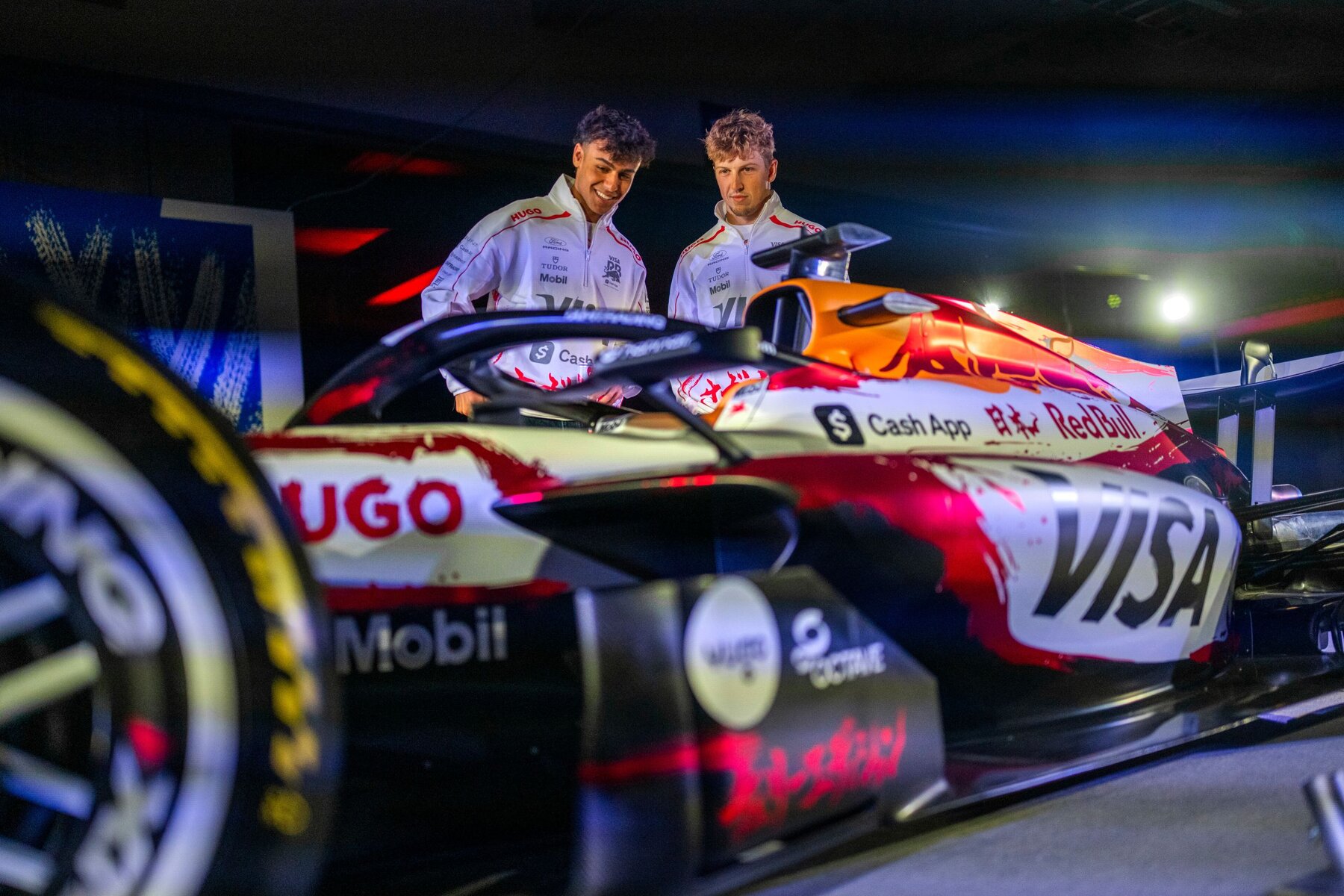
F1 Telemetry and Data: What Teams See in Real Time
The gap between what the driver experiences inside the cockpit and what the engineers understand about the car’s behavior has narrowed to near-zero in modern Formula 1. Every sensor reading, every temperature measurement, and every energy flow calculation is transmitted from car to pit wall in real time, giving strategists, race engineers, and performance analysts a live picture of a machine generating enormous quantities of data at racing speed. In 2026, the demands on that data pipeline have grown to reflect a power unit and aerodynamic system of greater complexity than any previous generation of car.
The Data Acquisition Framework
What Article 8.5 Requires
Article 8.5 of the Technical Regulations governs data acquisition and specifies the channels that must be recorded for FIA oversight purposes. These mandatory channels include measurements relevant to safety and regulatory compliance: fuel flow rate, energy store state of charge, MGU-K output, wheel speeds, and the position data that feeds the proximity-based overtake system. The FIA can access this data after any session for inspection, and it forms the basis of technical enforcement.
Beyond the mandatory channels, teams instrument their cars with proprietary sensor networks covering aerodynamic load points, suspension kinematics, brake temperatures, cooling system performance, and component stress measurements at locations the regulations do not specify. The total channel count on a modern Formula 1 car runs into the hundreds, with data sampled at rates that vary by channel depending on how rapidly the measured value changes and how precisely engineers need to track it.
The standard ECU handles collection of all this data across both FIA-mandated and team-specific channels. It also manages the timestamps that allow engineers to correlate readings across different parts of the car when analyzing how a change in one system propagates through others. That correlation work, done lap after lap in real time, is where the data acquisition system pays dividends for performance engineering.
The Telemetry Link to the Pit Wall
Article 8.6 covers telemetry transmission. A high-bandwidth wireless link carries data from the car to the pit wall continuously during a session. Engineers watching live streams of their car’s sensor data can identify issues before the driver reports them, spot trends in component temperatures that suggest a developing failure, or track energy management against a predetermined strategy lap by lap.
The telemetry picture available to a Formula 1 team in real time is comprehensive. A race engineer watching the live feed during a stint can see brake temperature across all four corners, tyre pressure and temperature from the sensors integrated into each wheel, fuel flow rate against the regulatory limit, MGU-K deployment and harvest rates against the energy budget, and the active aerodynamic mode status indicating whether the car is in X-mode or Z-mode at any given point on the track.
This level of visibility means that many problems are caught by engineers before the driver is aware of them. A cooling system trending toward its limit, a brake duct performing below expected efficiency, or an energy store not recovering as predicted from one sector to the next can each trigger a discussion between race engineer and driver before the situation becomes critical. The lap time consequences of catching these issues early rather than late can be significant in a closely contested race.
What Rivals Cannot See
The telemetry link between car and pit wall is a one-way broadcast in terms of where the data ultimately flows. While teams share some aggregate information with commercial broadcasters through the official F1 data feeds that power television graphics, the raw engineering data stream is proprietary. Rival teams cannot access another team’s sensor readings, and the FIA keeps the data it receives from mandatory channels confidential between teams.
This creates a situation where each team has a detailed understanding of their own car and a much more limited picture of their competitors. Public GPS-based position data and the basic performance metrics visible in television broadcasts allow some inference about competitor strategy and lap time, but the granular engineering picture that drives performance decisions remains private. Teams invest in human expertise to interpret competitor behavior from the limited observable information, making the analysis team as important as the data stream itself in competitive terms.
What Engineers Do With the Data
Real-Time Strategy Decisions
The pit wall during a Formula 1 race operates as a live data analysis center. Strategy engineers track fuel load, tyre degradation rate, energy deployment against the 9MJ harvest ceiling, and competitor behavior simultaneously. The telemetry stream feeds models that project future lap times under different scenarios, and those projections inform the timing of pit stops, the decision to use the overtake override, and the energy deployment profile for the remaining laps.
The 2026 energy management structure adds complexity to this picture compared to previous regulations. The 4MJ state of charge delta per lap means that the energy budget is a live tracking problem rather than a simple fuel load calculation. If a car has harvested less than expected through a safety car period where low speeds limit regenerative opportunity, the engineers must adjust the deployment strategy for the restart and communicate the revised parameters to the driver in real time.
This is where the prohibition on driver coaching under the Sporting Regulations becomes relevant. Engineers cannot instruct drivers on optimal lines or braking points while the car is on track, but they can transmit updated mode settings and alert the driver to system states that require action. The distinction between coaching and operational communication is policed through the telemetry record, which provides a complete log of every transmission between car and pit wall during a session.
Post-Session Analysis
The data collected during a session has a second life in the hours and days following it. Engineers correlate the telemetry record with video footage, GPS trace, and component inspection data to build a comprehensive picture of how the car performed and why. Simulation models are updated based on actual measured behavior, and setup decisions for the next session or the next race are informed by where the real car deviated from model predictions.
In 2026, the active aerodynamic data adds a dimension to post-session analysis that did not exist previously. Engineers can review exactly when X-mode and Z-mode transitions occurred relative to corner entry, braking points, and throttle application to assess whether the aerodynamic mode profile was optimal. If the correlation between lift-off regeneration and Z-mode transition suggests a different harvesting approach might improve cornering stability in a particular sector, that feeds directly into the software calibration work for the next event.
Limits on What Technology Can Do
The Driver Coaching Boundary
Formula 1 draws a regulatory line between using data to optimize the car and using it to replace driver skill. The Sporting Regulations prohibit real-time driver coaching, meaning engineers cannot transmit detailed driving instructions to the cockpit while the car is on track. The purpose of this restriction is to ensure that the driver’s own judgment remains the primary determinant of how the car is driven through a corner.
The telemetry system makes the coaching boundary harder to enforce than it might initially appear. An instruction to deploy more energy through a particular sector sits in a gray area between operational communication and coaching. The FIA monitors radio transmissions and cross-references them with the telemetry record to identify cases where the communication crosses the line. The completeness of the data record makes this policing more credible than it would be with limited instrumentation.
The Human Analysts Behind the Numbers
The competitive advantage from telemetry does not come from having access to data. Every team has access to comparable data volumes. It comes from having analysts who can extract meaningful insight faster and more reliably than their rivals. The identification of anomalies within noise, the interpretation of hundreds of simultaneous channels, and the translation of sensor readings into actionable decisions require expertise that the data acquisition system alone cannot provide.
For teams looking to understand the full electronics and data architecture that governs how this information is collected, transmitted, and regulated, the 2026 F1 Electronics guide covers the regulatory structure from Article 8 through to the specific systems that populate the data streams teams analyze. The data itself is only as valuable as the team’s capacity to turn it into faster lap times, and that capacity remains one of the more difficult performance gaps to close through investment alone.
Want more F1Chronicle.com coverage? Add us as a preferred source on Google to your favourites list for the best F1 news and analysis on the internet.
From F1 news to tech, history to opinions, F1 Chronicle has a free Substack. To deliver the stories you want straight to your inbox, click here.
For more F1 news and videos, follow us on Microsoft Start.
New to Formula 1? Check out our Glossary of F1 Terms, and our Beginners Guide to Formula 1 to fast-track your F1 knowledge.

Comments
More in News

Lewis Hamilton Net Worth and Salary: Ferrari Contract, Sponsors, and Business Empire
Suzuka’s 130R and the S Curves: F1’s Most Technical Corners Explained
Godzilla themed Haas F1 Team car unveiled for the Japanese Grand Prix
Jak Crawford to take part in Japanese Grand Prix FP1 for Aston Martin