
Explaining F1’s New 2026 Tech: Key Terms Fans Need to Know
With Formula 1 set to introduce sweeping aerodynamic and power unit regulations in 2026, the new era will also bring a fresh set of technical terminology. Here’s a breakdown of the key terms you’ll be hearing once the new rules come into force.
Boost Button
Drivers will continue to have the ability to deploy stored electrical energy at any point during a lap, but from 2026 this function will be referred to as the Boost Button.
When activated, it switches the power unit to a higher power setting either full deployment or a team-defined profile. The boost can be used strategically to defend against an attacking car or to mount an overtake, provided sufficient energy has been stored. Drivers may deploy it all at once or distribute it across the lap, depending on where overtaking opportunities or vulnerabilities arise.
Overtake Mode
A brand-new feature for 2026, Overtake Mode is designed to promote closer racing and increase passing opportunities.
This mode can only be activated when a driver is within one second of the car ahead at a designated detection point, typically the final corner. When triggered, it allows the driver to recharge an additional 0.5 megajoules (MJ) of energy and unlock a higher electrical power profile for the following lap. This enables the car to sustain higher speeds for longer periods, making it particularly effective on circuits with long straights.
Recharge
Recharge refers to how cars harvest energy to replenish the battery. Energy recovery can occur under braking, partial throttle, lift-and-coast phases (when drivers lift off the throttle early), or during “super clipping,” where limited energy harvesting occurs at the end of a straight even while at full throttle.
In most situations, Recharge will be automated through preset energy maps controlled by the ECU. Drivers will have direct control only over lift-off regeneration, where lifting off the throttle allows energy recovery—but at the cost of disabling Active Aero. By contrast, super clipping maintains full throttle, meaning Active Aero can remain engaged.
Active Aero
For the first time, Formula 1 cars will feature fully Active Aerodynamics, with both front and rear wings dynamically adjusting depending on track conditions.
In corners, the wings will remain in a closed position to maximize downforce. On straights, they will switch to an open, low-drag configuration to increase top speed. Rear wings will be permitted to open on designated straights, more frequently than current DRS zones, and drivers will not need to be within one second of another car to activate them.
Drivers will manually open the wings in each activation zone, with the system automatically closing them under braking or throttle lift. A new safety feature for 2026 will also enforce a distance-based automatic shutdown in certain areas, preventing drivers from attempting corners with the wings still open.
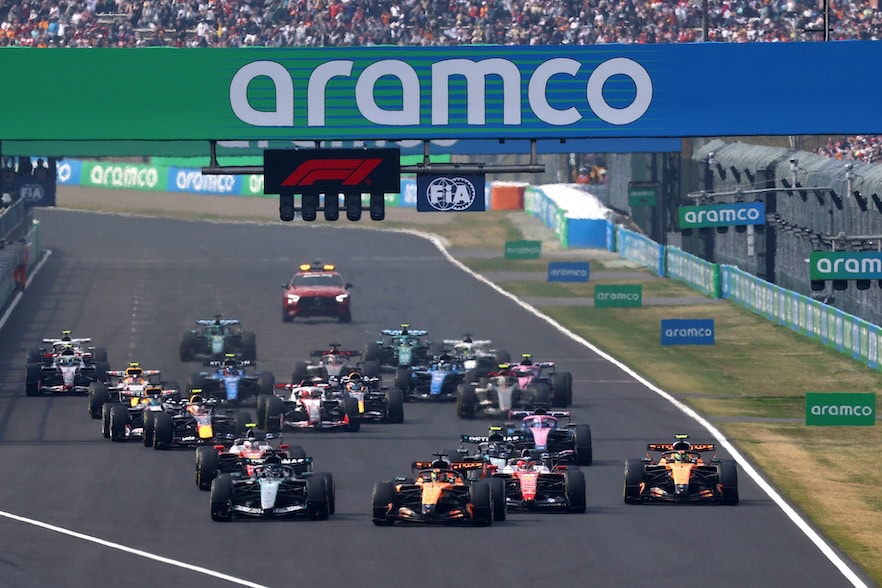
This safeguard is intended to avoid incidents like Jack Doohan’s high-speed off at Turn 1 in Suzuka in 2025.
From F1 news to tech, history to opinions, F1 Chronicle has a free Substack. To deliver the stories you want straight to your inbox, click here.
For more F1 news and videos, follow us on Microsoft Start.
New to Formula 1? Check out our Glossary of F1 Terms, and our Beginners Guide to Formula 1 to fast-track your F1 knowledge.

Comments
More in News
2026 F1 winners and losers; who stands where during this enforced lull?
Niki Lauda Before the Crash: The Driver, the Fire, and the Greatest Comeback in F1

‘Grateful that they made the decision for me’, Daniel Ricciardo reflects on F1 axing

Alpine highlight “equal opportunity for both drivers to be competitive,” in open letter addressing online abuse
