
Electromagnetic Compatibility: Why F1 Cars Can’t Interfere with Each Other
A modern Formula 1 car is one of the most electromagnetically complex machines in existence. The 350kW MGU-K, its associated power inverters switching at high frequency, the telemetry transmitters, the driver radio, the marshalling system receiver, and hundreds of sensors all generate or receive electromagnetic signals simultaneously during a race. Article 8.18 of the Technical Regulations requires that this activity stays within controlled limits, for reasons that have direct consequences for both safety and competitive fairness.
What EMC Rules Cover
Emissions from the Car
Article 8.18 governs electromagnetic radiation from the car. The regulations set limits on the electromagnetic emissions a Formula 1 car may produce across specified frequency bands. These limits exist because uncontrolled emissions from one car’s electronics could interfere with systems on other cars running in close proximity, with the FIA’s trackside infrastructure, or with the communications equipment used by marshals and race officials.
The power electronics that drive the MGU-K are the most significant potential source of electromagnetic interference on a 2026 car. A motor inverter operating at 350kW and switching at high frequency generates conducted and radiated electromagnetic noise across a broad spectrum. Without careful shielding and filtering, this noise would propagate from the car’s electrical system into the surrounding environment. Teams invest substantially in electromagnetic shielding for their power electronics, both to comply with the Article 8.18 requirements and because poorly managed EMI within the car’s own systems can corrupt sensor signals and degrade control system performance.
The Marshalling System and Track Infrastructure
The most safety-critical reason for EMC regulation is the FIA marshalling system, covered under Article 8.12. This system transmits information about track conditions directly to a display in the driver’s cockpit, including yellow flag sectors, virtual safety car signals, red flag conditions, and local yellow flags near incidents. If a car’s own electromagnetic emissions interfered with its ability to receive these signals, the driver could miss a mandatory warning that requires them to slow down or stop. The consequence of missing a virtual safety car signal is a time penalty; the consequence of missing a red flag is potentially far more serious.
The FIA’s timing infrastructure, which uses induction loops embedded in the track surface to trigger the timing transponders on each car, operates in frequency ranges that must be kept clear of interference. Article 8.16 requires that each car’s timing transponder interacts correctly with the timing loops, and that interaction depends on the car’s own electronics not drowning out the timing signal. An interference event that caused a car’s transponder to miss a loop trigger would corrupt the official timing data and potentially affect race results.
Why the 2026 Cars Present a Greater EMC Challenge
The 350kW Electrical System
The scale of the electrical system in 2026 cars makes EMC engineering significantly more demanding than in previous generations. At 120kW MGU-K output, the power electronics were already a substantial EMI source. At 350kW, the challenge increases roughly in proportion to the power level because the currents involved are larger and the switching events generate proportionally stronger electromagnetic fields. The energy store capacity and the charging and discharging currents that flow through the high-voltage bus during regeneration and deployment are also EMI sources that scale with the system’s capacity.
Teams manage this through a combination of physical shielding around high-voltage components, careful cable routing that minimizes loop areas where current flows in opposite directions, filtering on the interfaces between the high-power system and the car’s lower-voltage sensor and control networks, and grounding strategies that give interference currents a defined low-impedance path back to their source. The standard ECU, covered in detail in the 2026 F1 Electronics guide, must interface with all of these systems while maintaining clean signal integrity, which makes the ECU’s own electromagnetic environment one of the more demanding aspects of the 2026 car’s electrical architecture.
Car-to-Car Interference in Close Racing
The proximity-based overtake override system, which uses position data to determine when the following car is within one second of the car ahead in a designated zone, depends on reliable communication and sensor data. If a following car’s electronics were susceptible to interference from the leading car’s power electronics at close range, the overtake system could malfunction precisely in the situation where it is most needed. The EMC requirements in Article 8.18 are therefore not just about protecting external infrastructure; they are about ensuring that the car’s own systems function correctly when operating in the electromagnetically dense environment of wheel-to-wheel racing.
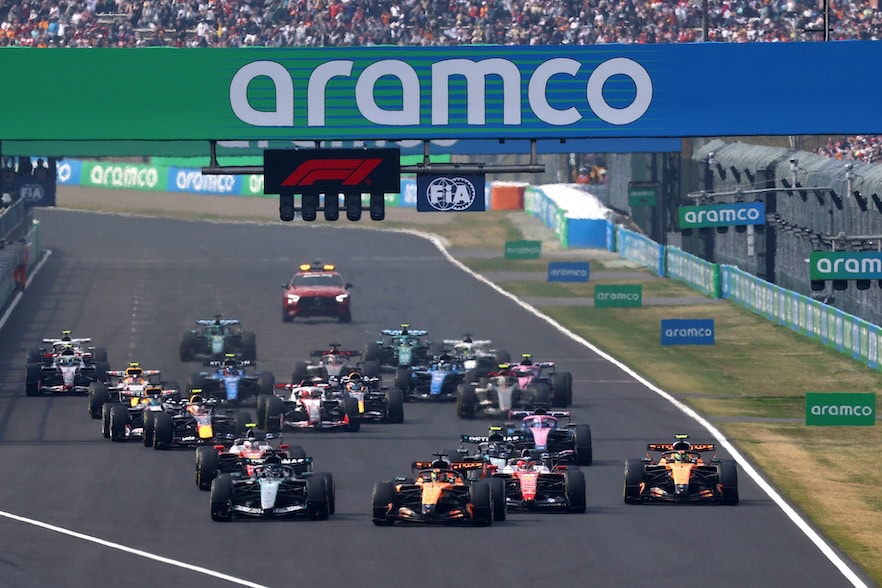
This is a relatively new concern compared to earlier eras of Formula 1. When cars ran with much simpler electrical systems, electromagnetic compatibility was primarily about not interfering with external timing and communications equipment. In 2026, with every car carrying a system that can deliver and harvest hundreds of kilowatts of electrical power within meters of another car doing the same thing, the car-to-car electromagnetic environment is part of the design challenge that the regulations must address and teams must engineer around.

Comments
More in News
2026 F1 winners and losers; who stands where during this enforced lull?

Niki Lauda Before the Crash: The Driver, the Fire, and the Greatest Comeback in F1

‘Grateful that they made the decision for me’, Daniel Ricciardo reflects on F1 axing

Alpine highlight “equal opportunity for both drivers to be competitive,” in open letter addressing online abuse
