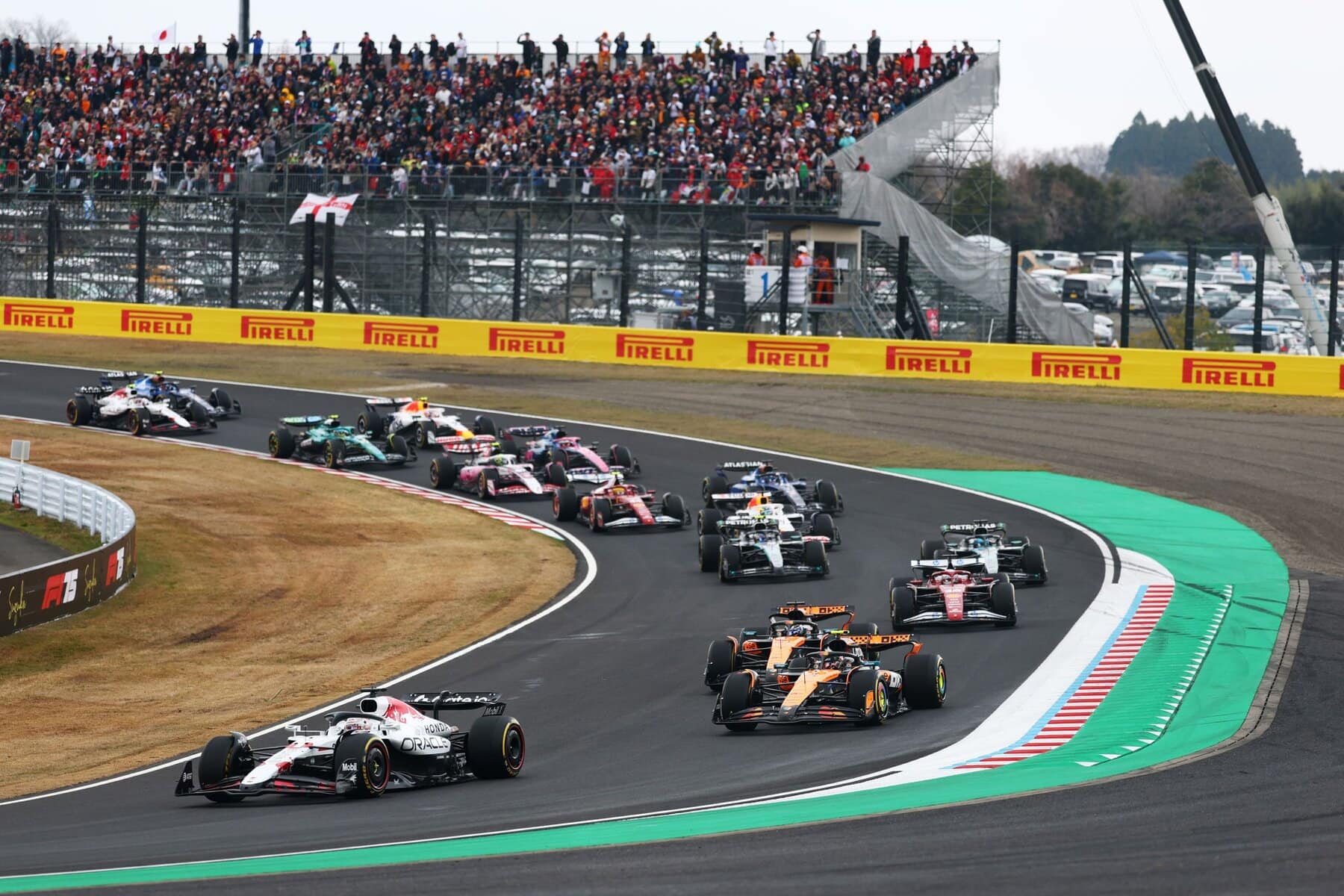
A Guide To Formula One Testing For The 2026 F1 Season
The 2026 Formula 1 season represents a total reset of the sport’s technical, sporting, and financial frameworks. As teams transition into this new era, the pre-season testing window has become the most critical 11-day period in modern racing history. This guide provides an exhaustive breakdown of the data, engineering requirements, and logistical scale behind the 2026 rollout.
Key Objectives of Formula 1 Testing
- Reliability: Flush out mechanical and electronic gremlins to ensure the car can finish a race distance.
- Aerodynamic Validation: Use aero rakes (pressure sensors) and flow-vis paint (fluorescent oil) to visualize airflow and match track data with simulations.
- Tyre Understanding: Test different compounds and setups to plan race strategies and maximize tyre life.
- System Checks: Verify power units, energy recovery, and complex electronic systems.
- Driver Adaptation: Help drivers get used to new cars, complex steering wheels, and intense G-forces.
What to Look For
- Aero Rakes: Metal structures with pitot tubes measuring air pressure, often seen on the car.
- Flow-Vis Paint: Fluorescent paint showing airflow patterns over the car’s surfaces.
- Race Runs: Long runs with high fuel and worn tyres to simulate race conditions.
- Qualifying Sims: Short runs with low fuel and soft tyres to gauge single-lap pace.
- Upgrades: Teams often bring significant upgrades for the second test or between tests.
Want more F1Chronicle.com coverage? Add us as a preferred source on Google to your favourites list for the best F1 news and analysis on the internet.
The Expanded 2026 Formula 1 Testing Calendar
Due to the complexity of the new Power Units (PU) and active aerodynamics, the FIA has authorized a significant increase in track time. Unlike previous years which featured a single 3-day test, 2026 utilizes an 11-day window across two continents.
| Session | Dates | Location | Primary Objective |
| Private Shakedown | Jan 26–30 | Barcelona, Spain | Systems Integration & Initial PU Cooling |
| Official Test 1 | Feb 11–13 | Sakhir, Bahrain | Aero Mapping & Active Aero Calibration |
| Official Test 2 | Feb 18–20 | Sakhir, Bahrain | Performance Runs & Traffic Simulation |
The Macro Scale: Global Logistics and Freight
Before a single wheel turns on track, the logistical operation to facilitate the 2026 reset is unprecedented. With the introduction of new manufacturers like Audi and Cadillac, the sheer volume of equipment required for testing has expanded the sport’s carbon and physical footprint.
- Total Logistics Distance: The 2026 season requires approximately 125,000 km of travel, which is roughly 3.1 times the circumference of the Earth.
- Air Freight Volume: Across 11 teams, approximately 1,200 tonnes of equipment are moved per race event. During testing, this number increases as teams bring “mule cars” and additional sensor arrays that do not travel during the standard season.
- Testing Duration: 11 days of track time are split across three sessions.
- Barcelona (Private): 5 days (Jan 26 to 30)
- Bahrain (Official 1): 3 days (Feb 11 to 13)
- Bahrain (Official 2): 3 days (Feb 18 to 20)
- Energy Consumption: All testing operations in 2026 are powered by the same 100% advanced sustainable “drop-in” fuel used in the cars, ensuring the logistics chain aligns with the sport’s Net Zero 2030 goals.
F1 Chassis Evolution: 2025 vs. 2026 Specifications
The 2026 “Nimble Car” philosophy focuses on agility and reduced weight to compensate for the heavier electrical components in the new power units. Testing is the first opportunity to validate if the reduced dimensions translate to the predicted lap times.
Dimensional Comparison Table
| Component | 2025 Specification | 2026 Specification | Delta |
| Minimum Weight | 800kg | 768kg | -32kg |
| Wheelbase | 3600mm | 3400mm | -200mm |
| Max Width | 2000mm | 1900mm | -100mm |
| Wheel Size | 18-inch (Standard) | 18-inch (Narrower Tyres) | Reduced Contact Patch |
| Active Aero | Static / DRS Only | Front & Rear (X/Z Modes) | Full System Integration |
The Weight Challenge
Achieving the 768kg minimum weight is a primary objective during testing. Teams that struggle to hit this target must run without paint (exposed carbon fiber) or reduce the complexity of their internal cooling systems, which impacts reliability.
The Power Unit Revolution: The 50/50 Split
The 2026 Power Unit (PU) is a fundamental departure from the 2014 to 2025 hybrid era. The removal of the MGU-H (Motor Generator Unit – Heat) and the massive increase in MGU-K (Motor Generator Unit – Kinetic) output creates a new set of thermal and energy management challenges.
- ICE Output: The 1.6-liter V6 internal combustion engine now produces approximately 400kW (roughly 535hp), down from the 550kW seen in 2025.
- Electrical Output: The ERS (Energy Recovery System) now produces 350kW (roughly 470hp). This is a nearly 300% increase over the 120kW limit of the previous era.
- Energy Harvesting: The MGU-K is now capable of recovering 9MJ of energy per lap. This is more than double the previous recovery capacity.
- Safety & Voltage: With the increased electrical output, the battery and ERS systems operate at higher voltages, requiring stricter “Red Light” safety protocols in the pit lane during testing.
Active Aerodynamics: Calibrating Z-Mode and X-Mode
Testing in 2026 is the first time engineers can validate “Active Aero” in real-world conditions. This system replaces the traditional DRS (Drag Reduction System) with a more complex, dual-element strategy.
Z-Mode (The Cornering Phase)
- Configuration: High downforce setting where both front and rear wing flaps are open to their maximum angle.
- Goal: Maximizing grip through technical sections like Sector 2 in Bahrain.
- Testing Metric: Engineers use aero rakes to ensure the air remains attached to the floor despite the aggressive wing angles.
X-Mode (The Straight-Line Phase)
- Configuration: Low drag setting where flaps flatten out to reduce the car’s profile.
- Goal: Maximizing top speed on straights to prevent “derating” (running out of battery).
- Testing Metric: Measuring the speed of the transition. The change from Z-Mode to X-Mode must be near-instantaneous to prevent the car from feeling “light” or unstable as the driver initiates a high-speed turn-in.
Safety Standards: Homologation and Crash Testing
Every car on the grid during testing has already passed the FIA’s 2026 crash test standards. These are the most stringent safety requirements in the history of the sport, influenced heavily by data from the 2022 Silverstone incident involving Zhou Guanyu.
Key Structural Limits
- Roll Hoop Vertical Load: Must withstand 140kN (approximately 14 tonnes) of force. This is a 23% increase over previous standards to prevent the structure from snapping off during an inverted slide.
- Frontal Impact: Peak G-forces must remain under 10g over 150mm of deformation. The total average deceleration for the impact must not exceed 40g.
- Side Impact Intrusion: A 25kN lateral force must result in less than 3mm of deformation to the survival cell. This is facilitated by a 6.2mm thick Zylon panel bonded to the chassis.
- Rear Impact: A 780kg sled impacts the car at 11m/s. The average deceleration must not exceed 35g, protecting the fuel cell and driver.
- Steering Column: An 8kg dummy head hits the steering wheel at 7m/s. The column must collapse safely without creating sharp edges.
Diagnostic Tools: How Teams Collect Data
Because teams are limited to one car during the 11 days of testing, they must maximize every second of track time. This results in the generation of approximately 5GB of data per lap, transmitted via 300+ sensors.
Aero Rakes and Pressure Mapping
Teams fit large metal lattices (Aero Rakes) behind the front wheels or above the rear diffuser. These rakes contain hundreds of Pitot tubes that measure air pressure.
- Validation: If the rake data shows a “dirty” wake that doesn’t match the CFD (Computational Fluid Dynamics) model, the team must redesign the floor or sidepod inlets.
Flow-Vis Paint
Fluorescent paint is applied to specific aero surfaces.
- The Process: As the car accelerates to 300km/h, the wind dries the paint into streaks.
- The Analysis: Engineers look for areas where the paint is “puddled” or has no clear direction, indicating airflow separation or a “stall.”
Static “Squeeze” Tests
Even in the garage, testing continues.
- Fuel Tank Floor: Must withstand 12.5kN of upward force to ensure the rubberized, Kevlar-lined fuel cell is protected from track debris.
- Front Bulkhead: Must withstand 30kN of lateral load to ensure the suspension mounts remain intact during high-G cornering.
The Human Element: Driver Adaptation
While the cars are technical marvels, the 2026 reset places a massive physical burden on the drivers.
- G-Force Management: With the cars being narrower and potentially more “twitchy” due to the 3400mm wheelbase, drivers must adapt to different lateral load profiles.
- System Complexity: The steering wheels for 2026 feature more toggles to manage the X and Z aero modes, along with the 50/50 power split.
- Installation Laps: The first phase of testing involves “Installation Laps” where drivers check basic systems: radio, throttle mapping, and brake-by-wire calibration.
New Entrant Dynamics: Audi and Cadillac
2026 marks the arrival of Audi (taking over Sauber) and the progression of the Cadillac/Andretti project. These teams face a steeper learning curve during testing.
- Integration Testing: Audi must validate the marriage of their German-built Power Unit with the Swiss-built chassis.
- Data Benchmarking: New teams lack historical “correlation data,” meaning their simulation models are unproven. Testing is their only chance to see if their “virtual” car matches the physical reality.
2026 F1 Testing Vital Statistics

Formula 1 testing in 2026 is a race against time. With only 99 hours of potential track time before the first Grand Prix, every data point collected from the aero rakes, the 140kN roll hoop, and the 350kW ERS system is a building block for the championship.
Testing can also be an important time for fans, especially those who are interested in getting involved with sports betting. Testing can provide valuable insight into how teams and drivers are performing before the season begins. By monitoring testing times, car developments and driver feedback, bettors can make more informed decisions when it comes to placing bets. Getting involved earlier on also means that bettors can access the best promo codes and bonuses, click here to see an example.
From F1 news to tech, history to opinions, F1 Chronicle has a free Substack. To deliver the stories you want straight to your inbox, click here.
For more F1 news and videos, follow us on Microsoft Start.
New to Formula 1? Check out our Glossary of F1 Terms, and our Beginners Guide to Formula 1 to fast-track your F1 knowledge.

Comments
More in News
‘I’m not speaking before he’s leaving’, Verstappen ejects journalist from Japanese GP media session

‘Maintaining qualifying as a performance challenge’, FIA adjust qualifying rules for Japanese GP

2026 Japanese Grand Prix: Fast Facts

Lewis Hamilton Net Worth and Salary: Ferrari Contract, Sponsors, and Business Empire