
What Is Flow-Vis Paint, the Fluorescent Green Paint Seen on F1 Cars?

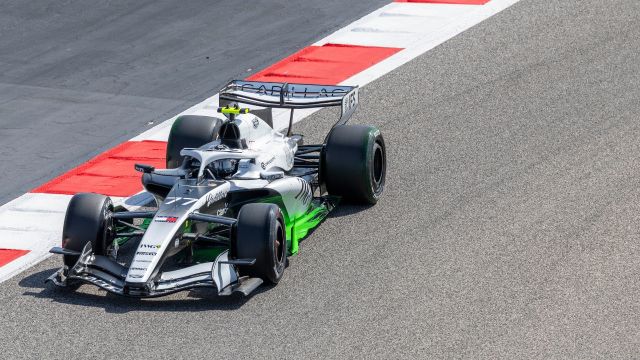
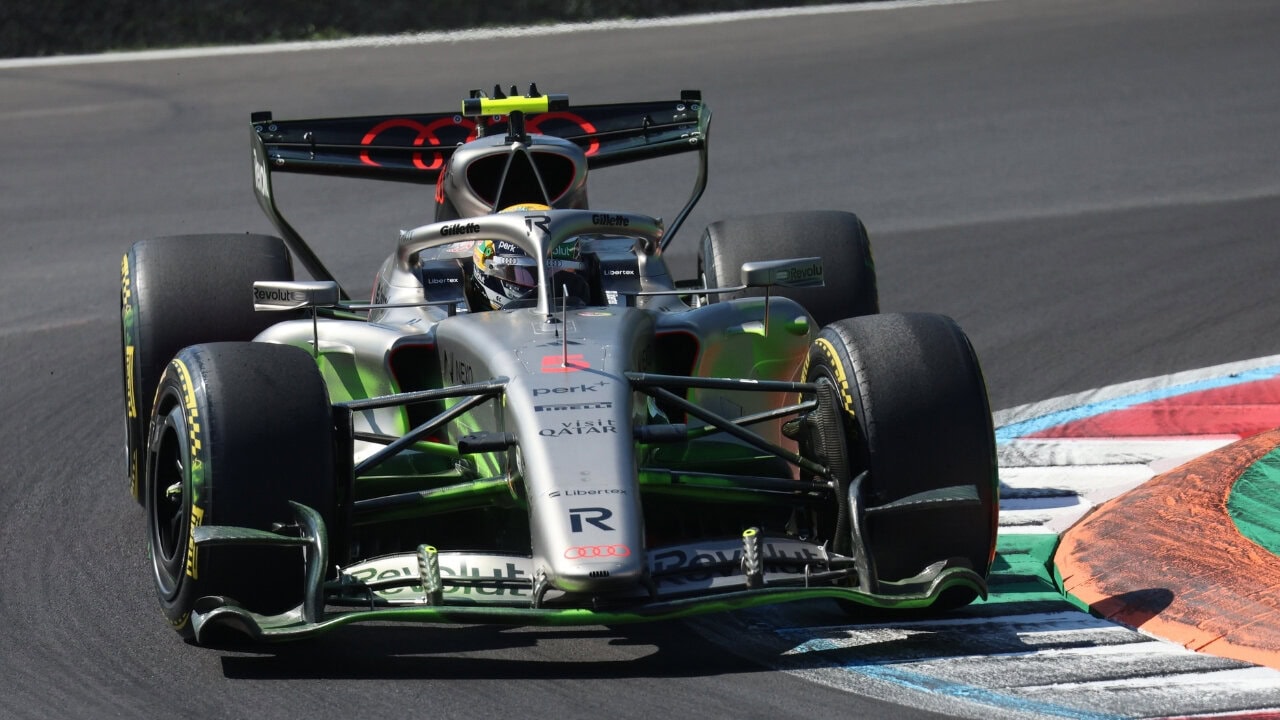
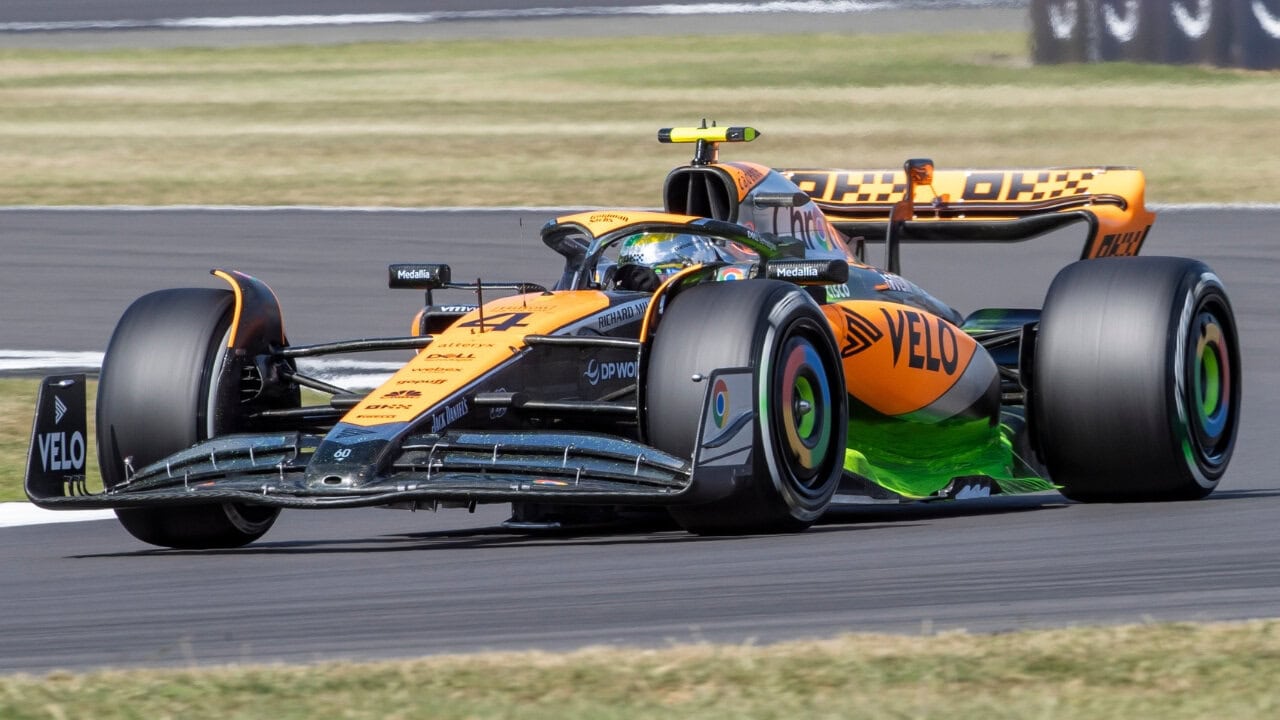
Formula 1 cars sometimes appear with bright fluorescent green or yellow paint during pre-season testing and practice sessions. This unusual substance is known as Flow-Vis paint. While it may look like a simple layer of paint, it serves an important purpose in car development.
Teams use it to study airflow over different bodywork surfaces and to understand how their aerodynamic designs behave under real-world track conditions.
What Is Flow-Vis Paint in Formula 1?
Flow-Vis stands for flow visualization. It is a special mixture of fluorescent powder and light oil that helps engineers visualize how air flows over an F1 car’s bodywork.
The mixture is applied to the car before it goes out on track, allowing engineers to study the airflow patterns left behind as the liquid evaporates.
Unlike regular automotive paint, Flow-Vis is a temporary testing material. Teams apply it to selected areas to investigate how their aerodynamic components perform.
What Is Flow-Vis Paint Made Of?
Flow-Vis generally contains two main ingredients:
- Fluorescent powder: This provides the bright color and leaves visible patterns on the car after the liquid evaporates.
- Light oil: Usually paraffin oil, it carries the powder and allows the mixture to move across the bodywork.
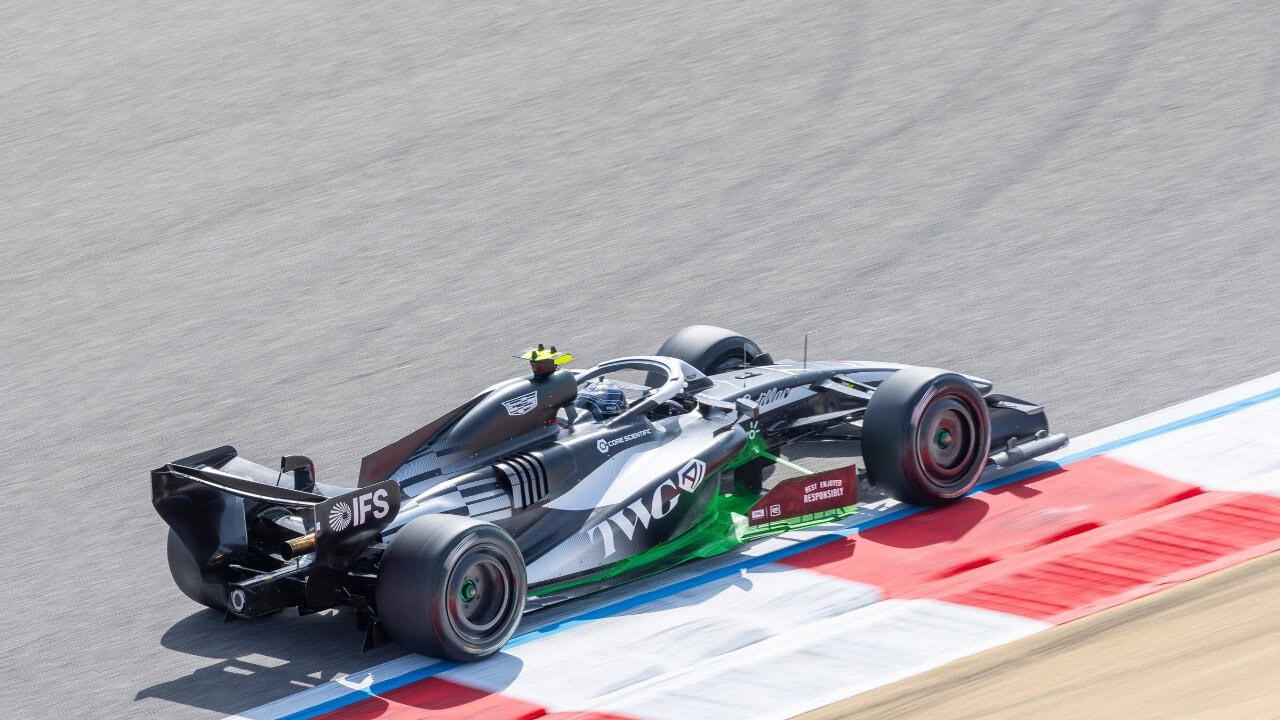
Teams can use different fluorescent colors depending on the testing requirements. Some also use darker mixtures that become visible under ultraviolet light.
How Is Flow-Vis Paint Prepared?
Preparing Flow-Vis involves mixing fluorescent pigment powder with light oil, usually paraffin. The mixture needs a suitable consistency to spread across the bodywork when exposed to airflow.
Engineers must prepare enough material for the selected testing area without making it too thick or watery. Its consistency is important because the mixture needs to produce clear patterns rather than run off the surface or dry before testing begins.
The exact formulas and preparation methods used by individual teams are not publicly disclosed.
How Do F1 Teams Apply Flow-Vis Paint?
Teams apply Flow-Vis shortly before a car leaves the garage. Mechanics spread it across selected aerodynamic components, including the front wing, rear wing, sidepods, and floor.
The driver then takes the car onto the circuit. As the vehicle moves, airflow pushes the mixture along the bodywork, creating streaks that follow the airflow.
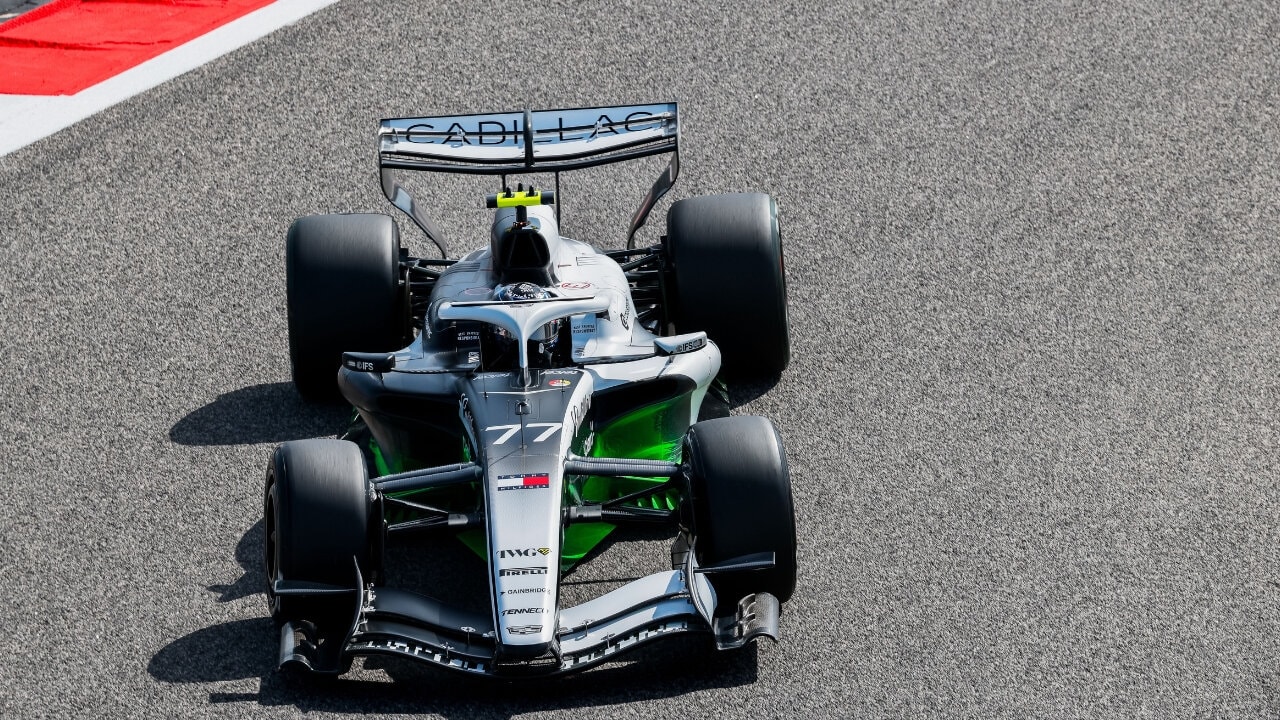
The oil gradually evaporates, leaving behind fluorescent patterns. Once the car returns to the garage, engineers photograph these marks before cleaning the surface.
How Much Does Flow-Vis Paint Cost?
There is no verified price made public for the Flow-Vis mixtures used by Formula 1 teams. They prepare their own mixtures to meet specific testing requirements, and their material costs are generally not disclosed.
How Does Flow-Vis Paint Help F1 Car Development?
The biggest benefit of Flow-Vis is that it helps engineers identify airflow separation. This happens when air no longer follows a surface smoothly, failing to maintain the intended flow pattern.
Such problems can affect the performance of nearby aerodynamic components. By examining the visible marks, engineers can identify areas that need further investigation.
They can then compare the track observations with information from wind tunnel testing and computational fluid dynamics (CFD). This helps them understand whether their development work matches the behavior of the actual car.
What Are the Limitations of Flow-Vis Paint?
Although Flow-Vis provides useful information, it does not directly measure downforce, drag, or air pressure. It only creates visible patterns that engineers must interpret.
Its results also depend on correct application. Too much mixture can create puddles and interfere with the airflow, while too little may leave unclear marks.
Teams must also consider track conditions and the time available before the mixture dries. Therefore, they use other aerodynamic testing equipment to support their findings.
More F1 Reading
- Fred Vasseur Downplays Lewis Hamilton-Charles Leclerc Conflict as ‘Accumulated Frustration’
- Mercedes Violate Curfew Rules at Brazilian GP, FIA Reveals Verdict
- Colton Herta Finally Earns His Super License by Covering 1-Point Deficit at Brazilian GP FP1
- Who Is Freddie Slater, the Driver Replacing Nico Hulkenberg at Brazilian GP FP1?
Comments
More in News

Fred Vasseur Downplays Lewis Hamilton-Charles Leclerc Conflict as ‘Accumulated Frustration’

Mercedes Violate Curfew Rules at Brazilian GP, FIA Reveals Verdict
Colton Herta Finally Earns His Super License by Covering 1-Point Deficit at Brazilian GP FP1

Who Is Freddie Slater, the Driver Replacing Nico Hulkenberg at Brazilian GP FP1?
