
From Stopwatches to Transponders and Timing Loops: How Formula 1 and TAG Heuer Mastered the Art of Timekeeping

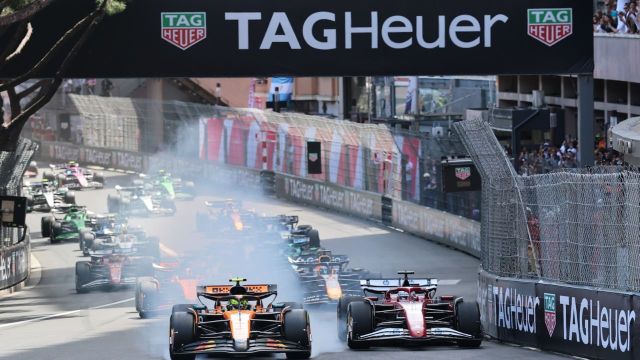
In Formula 1, the difference between victory and defeat can be measured in thousandths of a second. Yet, behind the sport’s relentless pursuit of speed lies another race – the pursuit of precision.
While today’s timing systems capture every movement with remarkable accuracy, measuring a car’s lap time was once a far more manual affair. From officials manually operating mechanical stopwatches to sophisticated electronic systems tracking cars around entire circuits, Formula 1’s relationship with timekeeping has undergone a remarkable transformation.
Few names have been as closely associated with this evolution as TAG Heuer, whose innovations helped change how motorsport measures performance.
In the sport’s early years, timing depended largely on human observation and mechanical stopwatches. Officials recorded cars crossing the start-finish line, noted their lap times, and manually compiled results. It was a demanding exercise, particularly as grids grew and the margins between competitors became increasingly narrow.
Heuer, TAG Heuer’s predecessor, had already established its credentials in precision timekeeping. Its Mikrograph, introduced in 1916, could measure time to 1/100th of a second, while its dashboard chronographs brought accurate timekeeping into the world of automobiles. The company’s motorsport involvement took a significant leap in 1971, when it supplied Ferrari with the Le Mans Centigraph for its Fiorano test circuit.
Capable of measuring to 1/1,000th of a second and monitoring multiple cars, the electronic system gave teams a considerably more detailed understanding of their performance.
The development of automatic car identification technology, or ACIT, marked another important step. Rather than relying entirely on officials to identify passing cars, electronic devices could distinguish individual vehicles and associate them with recorded times. The groundwork for a new era of motorsport timing was being laid.
The Invisible Technology Behind Every Lap of Formula 1
As technology advanced, transponders and electronic timing loops transformed the way Formula 1 monitored its cars. Each vehicle started carrying timing transponders that transmitted a unique identification signal, while sensors embedded beneath the circuit surface detect when a car passes. Positioned at regular intervals, these loops allowed the timing system to precisely determine when a car crossed designated points.
The information was then processed to calculate lap times, sector splits, gaps between competitors, and average speeds. It also played an important role in monitoring pit-lane speed limits, where the time taken to travel between detection points helped establish whether a driver had exceeded the permitted speed.
Meanwhile, modern timing is complemented by backup detection systems, ensuring that critical race information remains reliable.
TAG Heuer and Formula 1: A Relationship Measured in Milliseconds
Heuer’s connection with Formula 1 extends beyond the development of timing equipment. In 1969, it became the first luxury watchmaker to have its logo appear on an F1 car, through its association with Swiss driver Jo Siffert. A Ferrari partnership followed in 1971, before the brand became TAG Heuer in the 1980s and established another enduring relationship with McLaren.
From 1992 to 2003, TAG Heuer served as Formula 1’s Official Timekeeper, associating its name with some of the sport’s most memorable moments and drivers, including Ayrton Senna. Its involvement continued through partnerships with Red Bull Racing from 2016, linking the brand to another successful chapter in modern F1.
In 2025, TAG Heuer returned as Formula 1’s Official Timekeeper under the sport’s 10-year partnership with LVMH. It was a fitting continuation of a relationship built on shared values of precision, innovation and performance.
From the stopwatch in an official’s hand to transponders communicating with sensors beneath the asphalt, Formula 1’s approach to measuring time has changed beyond recognition. Yet the principle remains unchanged: every fraction of a second matters.
More F1 Reading
- What Safety Car Is Used in F1? Who Is Bernd Maylander, F1’s Trusted Safety Car Driver of 26 Years?
- Skip the Grandstand: How to Experience the Las Vegas Grand Prix Without a Race Ticket
- This Is How Mercedes Could Complete F1 Championship Double at Brazilian GP in Sao Paulo
- Why Colton Herta Is One Superlicence Point Short Despite Appearing to Reach 40
Comments
More in News

Christian Horner Drops Major Hint on Alpine Formula 1 Team Stake
Formula 1’s V-8 Return Takes Major Step Forward as Manufacturers Agree on 2030 Engine Framework

Toto Wolff Says World Champion Kimi Antonelli ‘Deserves to Be Rewarded’ as Pay Raise Looms

‘I LOVE IT!!’: F1 Fans Go Wild as Snapdragon Launches Anthem Film for 20-Year-Old Champion Kimi Antonelli
